When it comes to pour-over with milk, many people's first thought is café au lait, but the coffee strength of au lait is on the low side; after pouring in milk, the mouthfeel and flavor are easily diluted, creating an obvious gap compared with Italian-style latte. To make filter pour-over hold up a cup of milk coffee, the key is to make the coffee concentrated enough: tighten the coffee-to-water ratio, choose medium-dark roasted beans, control the extraction rhythm, and then combine with milk according to proportion.
Speaking of pour-over with milk, I believe everyone's first thought is definitely café au lait. However, because the coffee strength used in café au lait is relatively low, it dilutes a lot of the mouthfeel and flavor, so compared with Italian-style latte, the difference is still quite big.
But recently, while surfing the internet, Qianjie came across a store-visit video by a well-known Korean coffee blogger. In the video, the champion barista made a "latte" with excellent flavor and mouthfeel through pour-over coffee. So how did he do it? Today Qianjie will share how to make, through pour-over, a "latte" that comes infinitely close to latte coffee. Are you ready!!!

How to make a "latte" with pour-over?
Why does this latte have double quotation marks? There are two reasons. The first is that today's latte coffee refers only to milk coffee made with espresso as the base and a certain proportion of milk; the second reason is that milk coffee made with pour-over can only be close to, and cannot fully replicate, the taste and mouthfeel of a real latte, and it is also not quite the same as café au lait in the traditional sense, so the "latte" made with pour-over in this article will always carry double quotation marks.
For coffee paired with milk, it is best to choose medium-dark roasted beans, because they are heated for longer, and the caramelization reaction and Maillard reaction bring rich roasting aromas; combined with milk, they will form a richer, mellower mouthfeel. If making milk coffee at home, the first choices are Qianjie Queen's Estate, Qianjie Brazil Cerrado, and Qianjie PWN Golden Mandheling. They taste low in acidity and mellow, suitable for friends who like strong coffee.

Back to the point: how do we use pour-over coffee to make a "latte"? It sounds rather outrageous, but it is very simple to do. We only need to follow the extraction principle of espresso to make a cup of extremely high-strength pour-over coffee as the base, then add milk in an appropriate proportion, and we can imitate latte coffee!
Therefore, our requirement for this pour-over coffee is: high strength. And to make a cup of pour-over coffee with relatively high strength, we need to adjust the coffee-to-water ratio in the extraction plan! Because in making a cup of coffee, the less water used for extraction, the more coffee substances the water carries at the same extraction yield, and the higher the strength will therefore be.
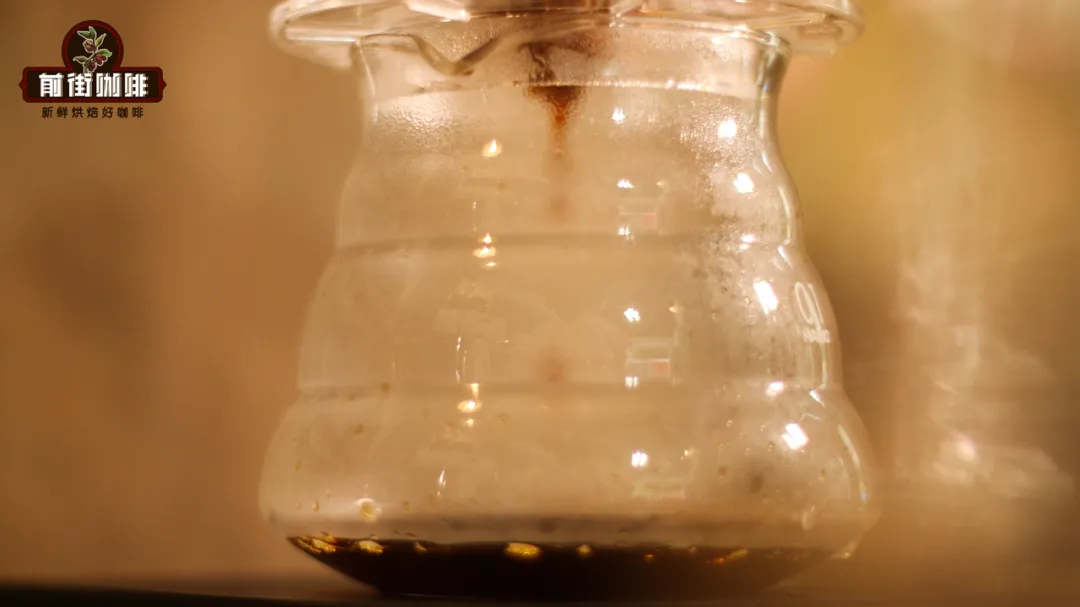
However, we need to know that the coffee-to-water ratio is closely linked with other extraction parameters in an extraction plan! Increasing the coffee-to-water ratio means less water is available to extract the coffee grounds; with other parameters unchanged, the overall extraction time will be shortened. Therefore, if only the coffee-to-water ratio is changed and the original parameters are used elsewhere for brewing, then you will absolutely get a cup of pour-over coffee that is under-extracted and not strong enough.
Take espresso extraction as an example: although espresso's coffee-to-liquid ratio is extremely high at 1:2, it uses higher water temperature, finer grinding, and pressure assistance, which is what allows a small amount of hot water to extract a sufficiently high coffee strength in a short time. So, if we need to use a high coffee-to-water ratio to obtain a pour-over coffee as strong as espresso, we also need to follow this principle: simultaneously improve the extraction efficiency of all other parameters. So next, let Qianjie share the extraction approach for making a "latte" with pour-over!
The approach to making a "latte" with pour-over
To make a cup of high-strength pour-over coffee, the first thing to decide is the coffee-to-liquid ratio! Qianjie here follows the coffee-to-liquid ratio commonly used for espresso -- "1:2"; converted to coffee-to-water ratio, that is 1:4, because coffee grounds will absorb twice their own weight in water! And a cup of milk coffee needs at least 40 ml of coffee liquid as the base, so calculated at a coffee-to-liquid ratio of 1:2, the amount of coffee grounds we use this time is 20 g.
But since pour-over coffee has no pressure assistance, besides grinding finer and raising the water temperature, we also need to extend the extraction time and increase the number of stirs to increase extraction efficiency! And through several rounds of experiments, Qianjie obtained a relatively suitable extraction plan:

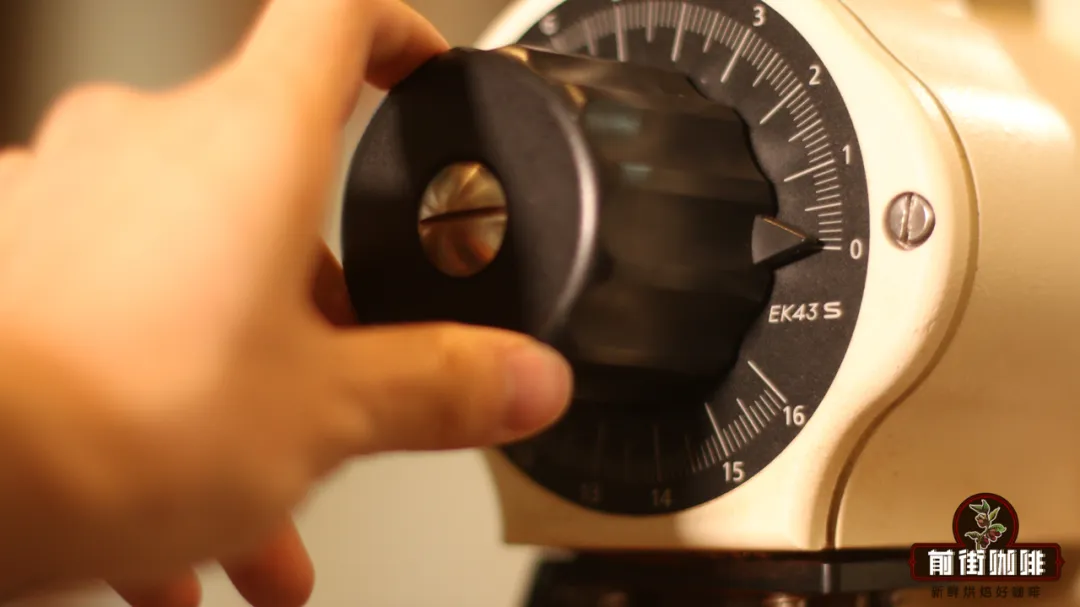
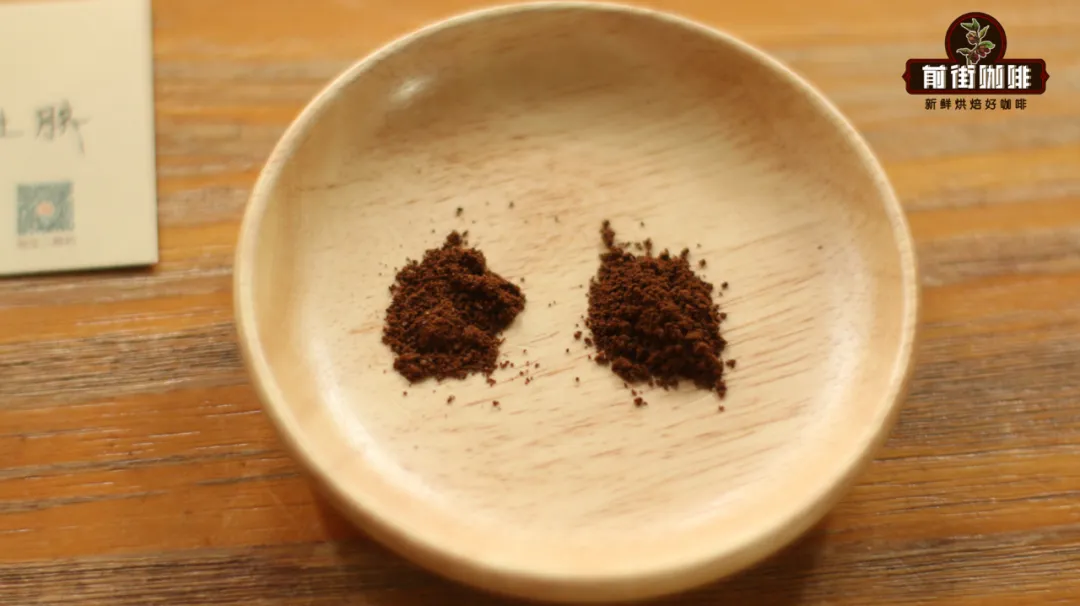
The coffee beans used in this experiment are Qianjie Colombia Ombligon, an anaerobic natural bean with flavors of blackcurrant, dried fruit, floral notes, and blueberry! The coffee-to-water ratio is 1:4 (that is, 80 ml hot water; converted to coffee-to-liquid ratio, it is 1:2), the water temperature is 96°C~98°C, and the grind is the finest setting of a pour-over grinder, closest to flour-like particle size (if using a hand grinder, then when it is not fine enough, we can grind twice; the finer the better). The dripper is Kono/Infinite dripper (able to slow the flow rate and extend extraction time). Then we need to prepare a small stick for stirring, because the water amount is too small; we need to "force out" the substances in the coffee grounds through stirring. So let's start our brewing!
(The left image shows the finest powder from a pour-over electric grinder; the right image shows espresso grind.)
First, wet the filter paper, then pour the ground coffee into the dripper. Here comes the key point! Pour in all 80 ml of hot water in one go, then immediately take out the stirring stick and stir frantically; when the entire coffee bed has been stirred evenly, we can stop stirring (about 1 minute), and wait for extraction to finish.
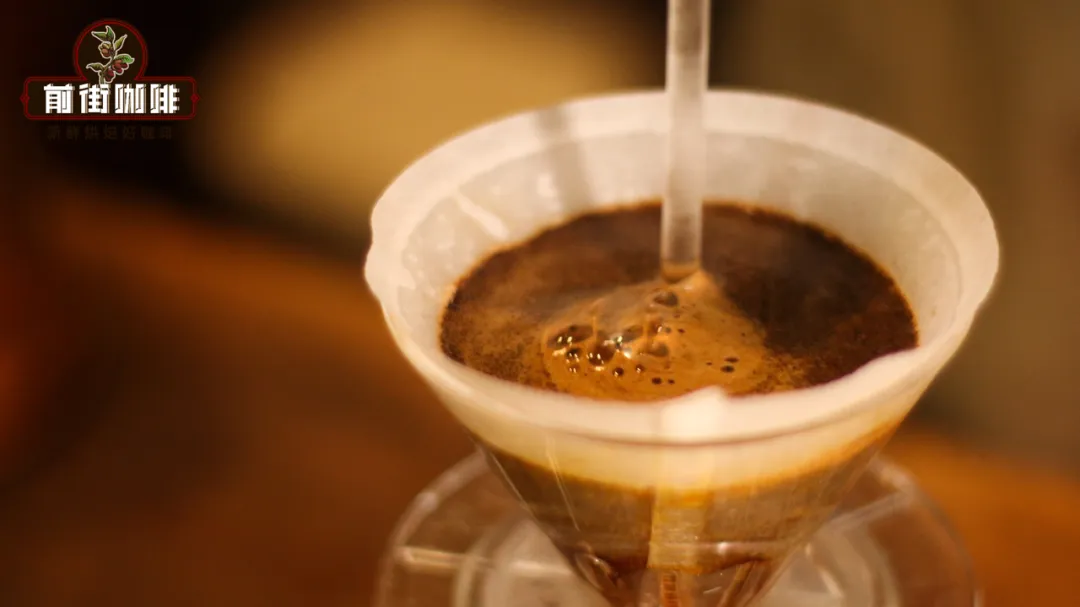
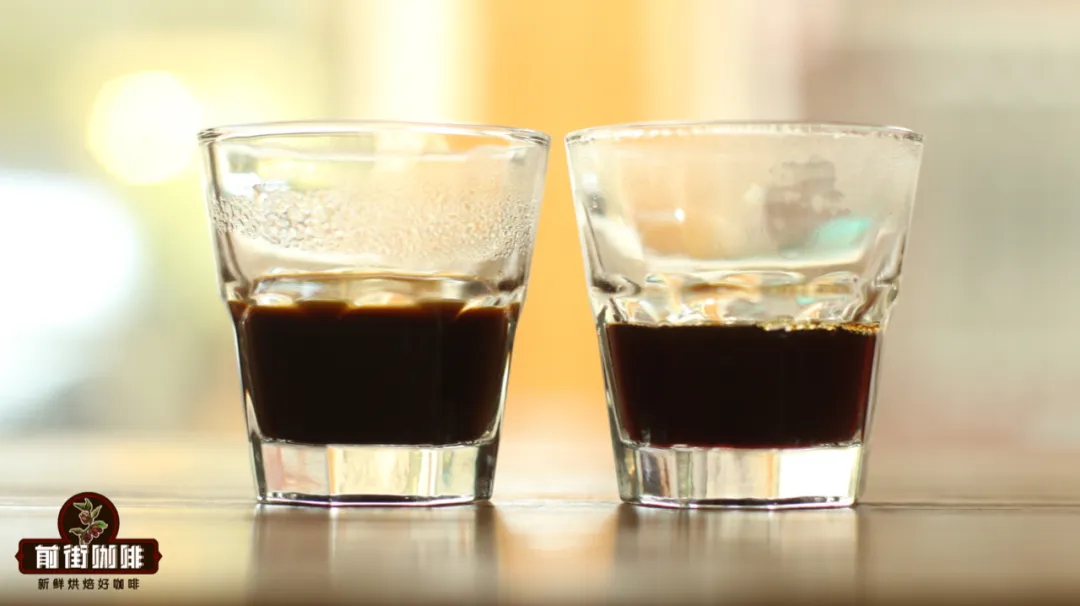
Although there is only 80 ml of hot water, with extremely fine grinding, stirring extraction, and a slow dripper working together, the extraction time will also reach about 2 minutes. At 2 minutes 05 seconds, extraction is complete; remove the dripper, and the liquid weight is 45 ml! We can see from the color of this coffee liquid that it is very concentrated!
(The left image is espresso; the right image is high-strength pour-over coffee.)
Qianjie must emphasize again that because the strength of this coffee liquid cannot compare with espresso, we cannot use too much milk, otherwise it will be over-diluted. A ratio of 1:3 is fine! Converted, that is 45 ml pour-over coffee and 135 ml milk!
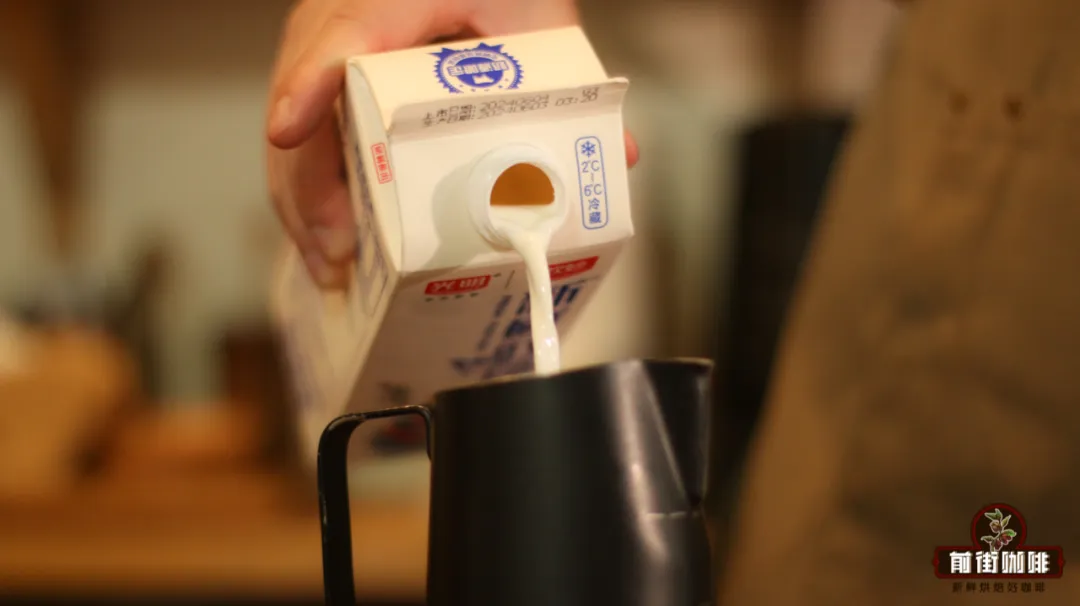
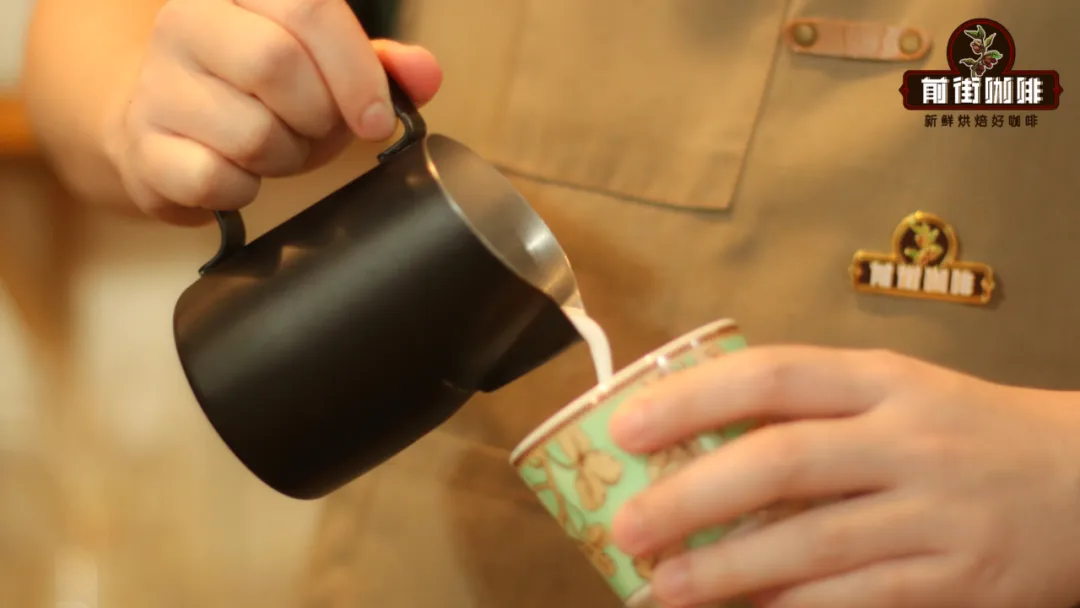
Steam the milk to 65°C, then do a simple latte art pour! (Ordinary hot milk is also fine; there are not many requirements.)
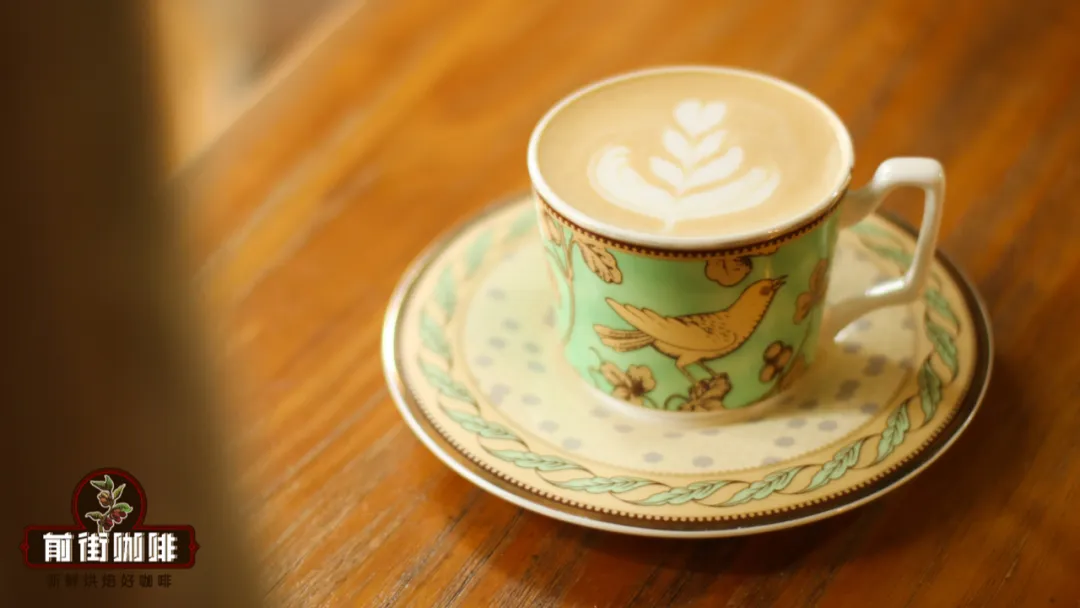
Finished. Its mouthfeel is very close to a regular latte coffee. Because Ombligon itself is an anaerobically processed bean, it has a hint of fermentation when drunk, followed by the berry notes of blueberry and grape! Compared with café au lait, this "latte" has a mellower mouthfeel and a richer flavor! And although it is not as outstanding as a regular latte, it offers more options; after all, different coffee beans can be swapped in, which is really quite nice!
So now everyone knows how to make a "latte" with pour-over coffee! If you have an espresso grinder at home, that is even better. We can directly use the espresso grinder for grinding, so there is no need to use a slow-flow dripper to extend the flow rate; V60 also works!

Light Roast Pour-Over Floral Coffee Beans Recommendation: Qianjie Yirgacheffe Gedeo Dingding, Qianjie Panama Hacienda La Esmeralda Green Label Geisha Coffee Beans, QianjiePanama Butterfly Coffee Beans
Daily medium-light roast Yirgacheffe pour-over floral coffee bean recommendation, Qianjie Yirgacheffe Guddina, light roast brings the signature white floral notesAromatic, with lemon-citrus fruit notes and a refreshing floral tea note; bright and crisp on the palate. Great value and an ideal entry-level pour-over coffee with floral and fruity notesAn unrivalled choice.
Moka pot, home espresso, and espresso-based milk drinks like latte — recommended beans: Qianjie Classic Espresso Blend, using BrazilianWest, with Mandheling Arabica and a small amount of Vietnamese Robusta fully blended, delivering a rich and outstanding espressocrema; overall style is rich and memorable. Qianjie Brazil Queen's Estate coffee beans and Qianjie Classic Espresso Blend coffee beans are both mochaA highly recommended option for pot-style espresso machines.
Fruity-floral signature espresso latte bean recommendation: Qianjie Strawberry Candy espresso blend, featuring strawberry gummy and rose aromas,Full-bodied sweetness with a grape and almond finish; especially stunning as an iced latte. Made from Costa Rican honey-process beans, PanamaBlended from Panama Geisha coffee beans and select beans from Colombia's Huila region. Not only does it overturn traditional espresso flavor, the cremaalso performs well, with impressive showings in creative specialty drinks.
Now available on Taobao store「 Qianjie Coffee 」To purchase the above coffee beans, Qianjie Coffee offers dozens of selected single-origin pour-over and espresso coffee beans from around the world. Qianjie CoffeeQianjie Coffee is a veteran specialty coffee roaster; beans are freshly roasted within 5 days, with consistent quality and highly competitive pricesGreat value, ships within 24 hours. Qianjie Coffee is recommended by many coffee lovers and platforms.
Taobao Qianjie Coffee Link: https://qianjiecoffee.taobao.com
Or search our shop directly on Taobao 「Qianjie Coffee」
Qianjie Coffee Store Address: 315 Donghuadong Road, Yuexiu District, Guangzhou

Site Recommendations: 耶加雪菲 花魁咖啡 瑰夏咖啡 波旁咖啡 蓝山咖啡 天堂鸟咖啡豆 曼特宁咖啡豆 PWN黄金曼特宁 星巴克菜单 咖啡豆种类
Please indicate the source when reprinting.
2026-08-16 12:29:49
