A small drip filter sits on the rim of the cup, with a layer of sweet condensed milk spread across the bottom—this is the most typical image of Vietnamese coffee. Coffee was brought in around 1857 by French Jesuit missionaries. After that, it went through war and fluctuations in output, and then expanded rapidly under government subsidy policies. Today, Vietnam is the world’s second-largest coffee exporter, mainly of Robusta. Local people care more about the brewing method than the bean variety, and the thick sweetness of condensed milk perfectly offsets the bitterness of the dark roast.

When it comes to Vietnamese coffee, the first image that comes to Qianjie’s mind is that very small drip filter, and the layer of sweet condensed milk in the cup. I wonder if anyone has ever been curious: when it comes to the bitterness of coffee, why do people elsewhere usually pair it with milk, while Vietnamese people prefer to add condensed milk? Today let’s start with the history of how Vietnamese people drink coffee~
The Origin and Development of Vietnamese Coffee
Vietnamese coffee was brought in around 1857 by French Jesuit missionaries. Over nearly 150 years of history, Vietnam has gradually developed its own distinctive coffee culture. Although Vietnam began growing coffee as early as the French Indochina period, coffee bean production remained relatively low due to the impact of war.

In the 1970s and 1980s, thanks to the support of the Vietnamese government through economic subsidy policies, the coffee industry improved substantially, and the corresponding planting farmland expanded rapidly as well. Over the past 20 years, Vietnam’s coffee bean output has advanced by leaps and bounds. It now ranks right after Brazil as the world’s second-largest coffee exporter, especially Robusta, which is used to make three-in-one instant coffee, accounting for nearly 1/4 of global production.
Unlike other countries, Vietnamese coffee in many people’s impressions is often not a certain kind of coffee bean, but refers to its unique brewing and drinking method. The drip filter and condensed milk are their most iconic way of drinking it.
Vietnamese Coffee Culture
In Vietnam, coffee shops are countless, and the extent to which Vietnamese people love coffee is among the highest in all of Asia. Many Vietnamese coffee shops are very homey and not high-consumption places; an ordinary cup of black coffee costs just a few yuan. Strolling the streets of Vietnam, you can always see customers sitting under all kinds of canvas awnings or sun umbrellas drinking coffee, with cups of various sizes and simple aluminum drip filters on low tables. Vietnamese people call it phin (derived from the French filtre).

According to the traditional way of drinking it, locals first pour condensed milk into the cup, then pour hot water over the coffee grounds already placed in the drip filter, and slowly wait for it to finish filtering. In about 5–10 minutes, you get a black-and-white coffee. If it is not sweet enough, you can add extra sugar, then add ice cubes and stir. In this way, a cup of rich and authentic Vietnamese iced coffee (Cà Phê Sữa Đá) is ready.

In addition, Vietnam has another coffee that has become popular around the world: egg coffee (Cà phê trứng). Although it sounds very unusual, in Hanoi this cup of coffee has been popular for nearly 80 years, and today it has become an important symbol of Vietnamese coffee culture. Egg coffee originated in an era of material shortage. Raw egg yolks, condensed milk, and white sugar are whipped into a dense foam, then added on top of pure black coffee. It is known as “liquid tiramisu.” Qianjie has also recreated it before. The taste combines the bitterness of coffee, the fragrance of egg yolk, the sweetness of white sugar, and the smoothness of condensed milk. The collision together is a pretty good experience. Friends who are interested can directly read the answer “The ultimate Vietnamese egg coffee recipe, it tastes comparable to tiramisu!”.

Speaking of this, we finally come to today’s question: why do these traditional coffees invented by Vietnamese people all add condensed milk? Behind this, the French colonizers of the time cannot be separated from the story. The birth of condensed milk coffee was, at first, also a helpless move.
The Accidental Origin of Condensed Milk + Coffee: Milk Shortage
At the end of the 19th century, the French brought coffee into Vietnam, and at the same time brought their coffee-drinking habit: adding fresh milk. But in that era without refrigerators, Vietnam’s climate was hot and humid all year round, making fresh milk very difficult to preserve. In addition, the dairy industry was not developed, and transportation costs were even higher. The milk that was finally obtained would spoil after a short while. At that moment, a key invention was born: condensed milk.

In 1856, the American Gail Borden invented canned condensed milk technology. By heating and evaporating the water in milk and adding a large amount of sugar as a preservative, long-term preservation of milk was achieved. This product soon spread to Vietnam along the routes of colonial trade.
As for this pre-made canned milk, Vietnamese people felt that it was not only easy to preserve and cheap, but could also “tame” the domineering bitterness of Robusta. As a result, condensed milk became the only dairy product choice at that time.
You should know that Vietnam is the world’s largest producer of Robusta. This bean has twice the caffeine of Arabica, a strong and heavy mouthfeel, and when dark roasted it has a rich burnt aroma and its own grain-like notes. If brewed alone as black coffee, it is extremely bitter for many people. But wonderfully, when it meets condensed milk, the strong bitterness of Robusta exactly cuts through that sweetness, forming a balance of combined strengths. Although fresh milk can now be easily obtained in Vietnam today, the flavor of condensed milk is already inseparable from the local coffee culture, and that extreme collision of flavors is also deeply engraved in the taste buds of Vietnamese people.
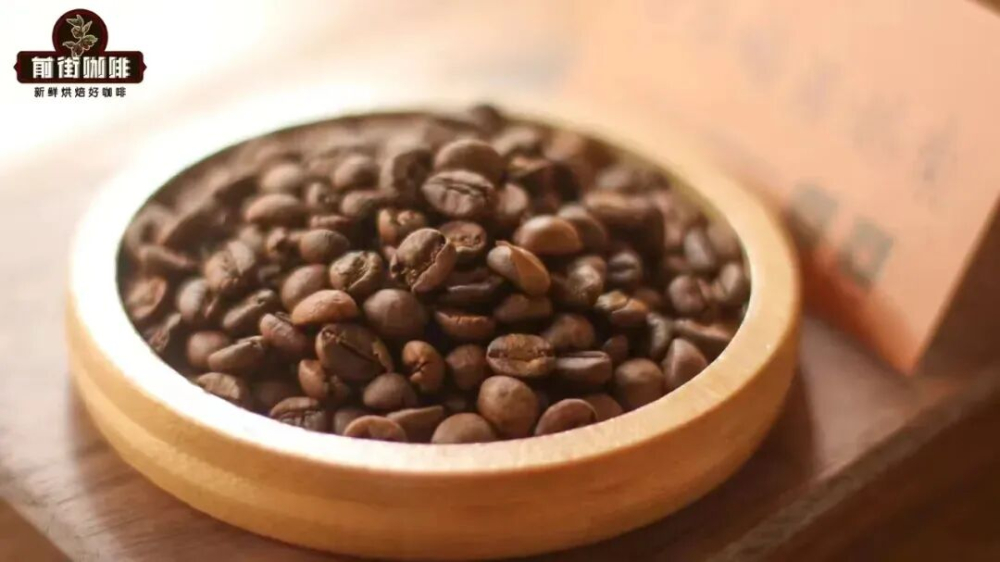
Finally, let’s make a cup of Vietnamese coffee~
To get closer to the traditional taste, we found Qianjie’s commercial blend with the heaviest mouthfeel. Its development concept is more oils, a mellow aroma, and good stability, and it contains a small amount of Robusta. Then, Qianjie dug out the long-dusted Vietnamese coffee filter phin, and after preparing hot water and condensed milk, it was time to start.

Step one: prepare a coffee cup, squeeze in 10g of condensed milk, then place the base of the coffee filter on top;

Next, weigh 15g of Qianjie commercial blend and grind it to coarse granulated sugar size (EK43s-11 setting), and pour it into the filter. First add a small amount of hot water (about 20g) to fully wet the coffee grounds, then place the pressing screen;

Pour in 130g of hot water in one go, or you can pour it in two batches. Finally, put on the top lid to prevent the pressing plate from floating up. The rest of the work is to wait for the coffee liquid to drip through.

In about 3–5 minutes, a cup of Vietnamese coffee is ready. Qianjie will not stir it at first, but take a small sip to feel that powerful coffee flavor, then use a small spoon to fully blend the coffee and condensed milk, and slowly experience the bitterness, sweetness, and aroma interweaving in the mouth.
- END -

Light Roast Pour-Over Floral Coffee Beans Recommendation: Qianjie Yirgacheffe Gedeo Dingding, Qianjie Panama Hacienda La Esmeralda Green Label Geisha Coffee Beans, QianjiePanama Butterfly Coffee Beans
Daily medium-light roast Yirgacheffe pour-over floral coffee bean recommendation, Qianjie Yirgacheffe Guddina, light roast brings the signature white floral notesAromatic, with lemon-citrus fruit notes and a refreshing floral tea note; bright and crisp on the palate. Great value and an ideal entry-level pour-over coffee with floral and fruity notesAn unrivalled choice.
Moka pot, home espresso, and espresso-based milk drinks like latte — recommended beans: Qianjie Classic Espresso Blend, using BrazilianWest, with Mandheling Arabica and a small amount of Vietnamese Robusta fully blended, delivering a rich and outstanding espressocrema; overall style is rich and memorable. Qianjie Brazil Queen's Estate coffee beans and Qianjie Classic Espresso Blend coffee beans are both mochaA highly recommended option for pot-style espresso machines.
Fruity-floral signature espresso latte bean recommendation: Qianjie Strawberry Candy espresso blend, featuring strawberry gummy and rose aromas,Full-bodied sweetness with a grape and almond finish; especially stunning as an iced latte. Made from Costa Rican honey-process beans, PanamaBlended from Panama Geisha coffee beans and select beans from Colombia's Huila region. Not only does it overturn traditional espresso flavor, the cremaalso performs well, with impressive showings in creative specialty drinks.
Now available on Taobao store「 Qianjie Coffee 」To purchase the above coffee beans, Qianjie Coffee offers dozens of selected single-origin pour-over and espresso coffee beans from around the world. Qianjie CoffeeQianjie Coffee is a veteran specialty coffee roaster; beans are freshly roasted within 5 days, with consistent quality and highly competitive pricesGreat value, ships within 24 hours. Qianjie Coffee is recommended by many coffee lovers and platforms.
Taobao Qianjie Coffee Link: https://qianjiecoffee.taobao.com
Or search our shop directly on Taobao 「Qianjie Coffee」
Qianjie Coffee Store Address: 315 Donghuadong Road, Yuexiu District, Guangzhou

Site Recommendations: 耶加雪菲 花魁咖啡 瑰夏咖啡 波旁咖啡 蓝山咖啡 天堂鸟咖啡豆 曼特宁咖啡豆 PWN黄金曼特宁 星巴克菜单 咖啡豆种类
Please indicate the source when reprinting.
2026-11-19 08:31:53
