They are both single-origin coffees, yet pour-over and cold brew taste like two different beans, and the reason lies in the differences in extraction temperature, time, and extraction efficiency. Using a flavor-forward bean like Kenya Little Tomato to make both a hot pour-over and a cold brew lets you directly feel the differences in acidity, sweetness, and aroma release, and also explains why cold brew more easily highlights fruity acidity.

Pour-over and cold brew are two extraction methods that let us quickly and conveniently drink single-origin coffee in daily life. Just yesterday, a friend left a question in the Qianjie backend about these two methods: Qianjie, Qianjie, I used the same bean to make pour-over and cold brew separately, but why do they feel so different as coffee?

Very good. Before giving the conclusion, Qianjie will first use the same bean to make one pour-over coffee and one cold brew coffee. Let's first look at what kind of different impressions there are between their tastes~
Experimental comparison
Pour-over coffee is divided into hot pour-over and cold pour-over. The flavor of ice pour-over will be weaker than hot pour-over, but the overall tonality of the two will not differ much, so the pour-over in this experiment will mainly be hot pour-over. The barista uses beans from Kenya's Qianjie Little Tomato, with flavors of smoked plum, little tomato, and snow pear.

Coffee beans suitable for both pour-over and cold brew are recommended: Qianjie Strawberry Candy, Qianjie Mozart, Qianjie Xizhua... this type of coffee bean with prominent floral and fruity flavors.
Pour-over parameters | Cold brew parameters | |
Dose | 20g | 20g |
Ratio | 1:15 | 1:12 |
Grind | EK43 setting 10, 60% passing rate on No. 20 sieve | |
Water temperature | 92°C | 23°C |
Brewing method | Three-stage | Immersion |
Extraction time | 2 min 02 sec· | 8 hours |
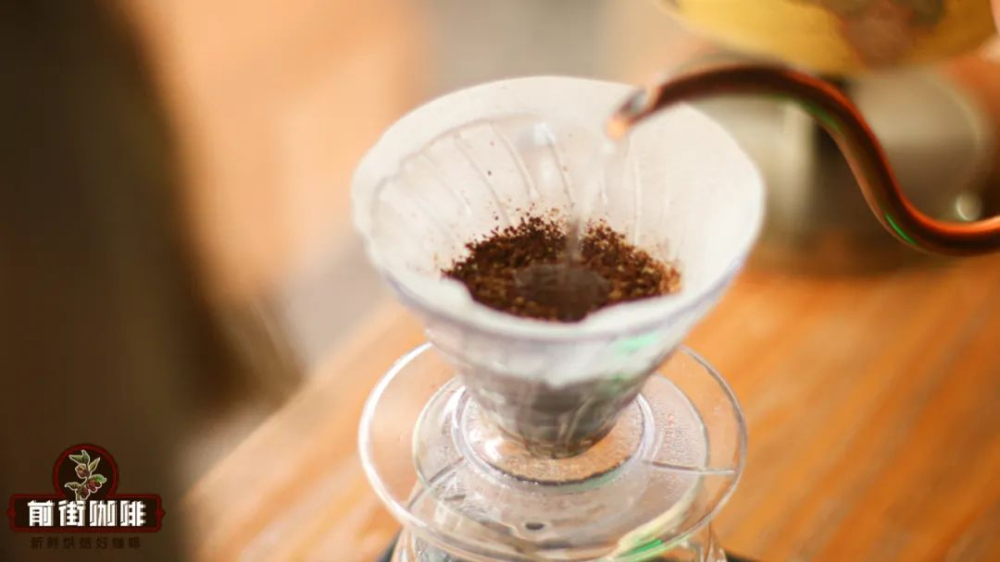
The Kenyan coffee brewed by pour-over has a relatively lifted acidity. We can very directly feel the sweet-and-sour flavors of smoked plum and little tomato, with distinct layers, and after drinking there is a relatively sweet finish. The overall impression is very clean;
The acidity extracted in the cold brew Qianjie Kenya is relatively soft, the sweet-and-sour taste is more balanced, and the flavors of smoked plum, little tomato, and yellow sugar blend with each other. It is smoother, the layers are not so distinct, and the aftertaste carries a bit of fermented aroma!
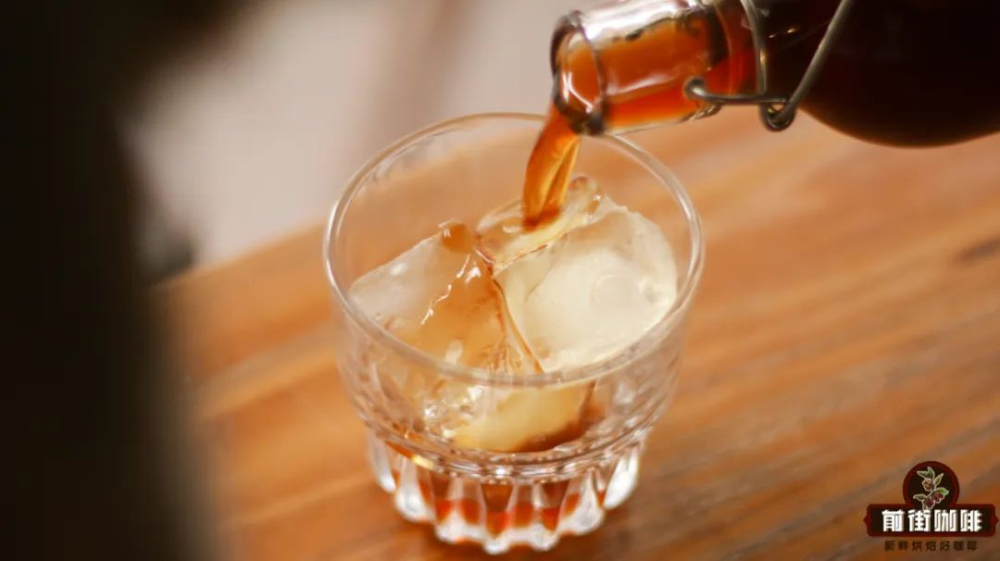
Indeed, the drinking experiences of the two are completely different! The pour-over Kenya has higher acidity, and the flavor is obvious and prominent; while the cold brew Kenya has soft acidity and a very balanced taste impression! So, friends can imagine in advance what aspects cause the difference in taste~
1. Extraction method
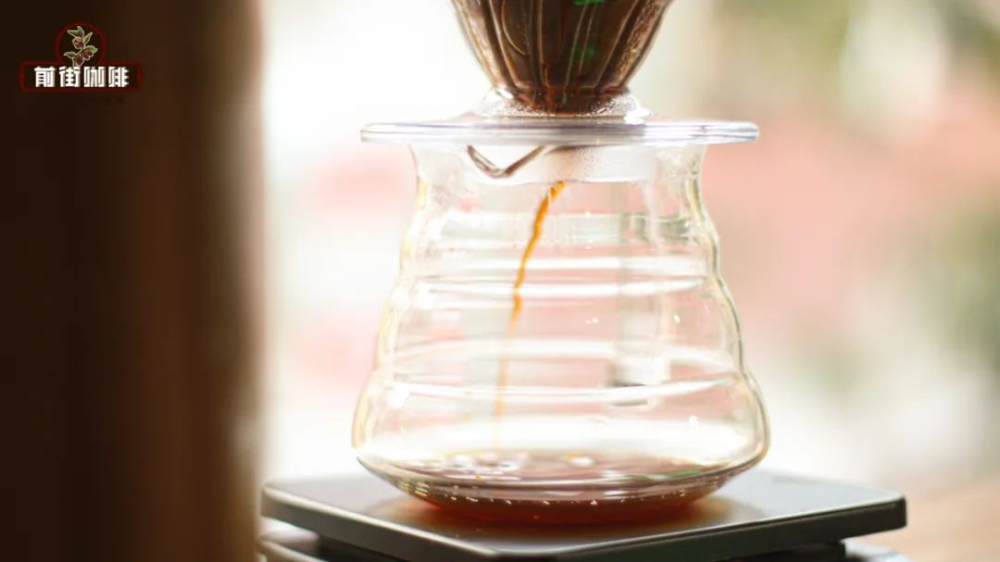
The first difference between pour-over and cold brew in production is their extraction method! The extraction method of pour-over coffee is "drip filtration." While hot water is poured in, the extracted coffee liquid drips out, and the contact time between grounds and water is shorter; while the extraction method of cold brew coffee is "immersion." Coffee grounds and water are mixed together for a long soak!
2. Coffee-to-water ratio
Next is their coffee-to-water ratio! The coffee-to-water ratio for pour-over coffee is 1:15, which allows the flavor substances in the coffee plenty of space to show themselves! The coffee-to-water ratio for cold brew coffee is usually in the range of 1:10~12, which packs a large amount of coffee concentration into a small space. So this is also why, even though cold brew coffee is already cold enough, we still need to add ice cubes. It is not to lower the temperature, but to "dilute"!
3. Water temperature
These two extraction methods have one biggest difference—"the water temperature used for extraction is completely different"! This is the biggest influencing factor causing the differences in taste and mouthfeel!
Coffee contains quinic acid, tannic acid, amino acids, caffeine, oils, and other substances. The tastes of sour, sweet, and bitter are jointly formed by them. During extraction, these substances are released in a stepped manner: first a large amount of sour substances is released, then a large amount of sweet substances is released, and finally a large amount of bitter substances is released! And the water temperature directly affects the release amount and is the main factor!
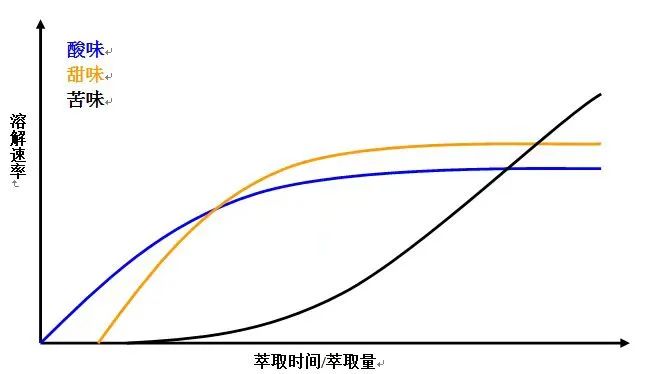
The higher the water temperature, the faster the extraction of substances. Therefore, various variable factors may affect the taste of coffee. So in the short two minutes of pour-over, we need to concentrate on brewing, mainly to carefully control the extraction rate and prevent these substances from being released too little or too much!
And the lower the temperature, the slower the extraction of substances and the longer the time required. But even if the extraction time is extended, we only increase its extraction rate; the substances it extracts will still be much less than hot pour-over, especially "tannic acid," a substance that contributes to both sourness and bitterness. The reason cold brew coffee's layers are not as rich as pour-over is precisely that it lacks some sourness.
Moreover, the body/fullness of a cup of coffee largely comes from the presence of bitter substances. When the proportion of bitter substances in a cup of coffee is greatly reduced, although the perception of other tastes will be amplified, the mouthfeel will not be too full (relative to pour-over coffee). Therefore, the tonal impression of cold brew coffee and pour-over coffee is completely different~
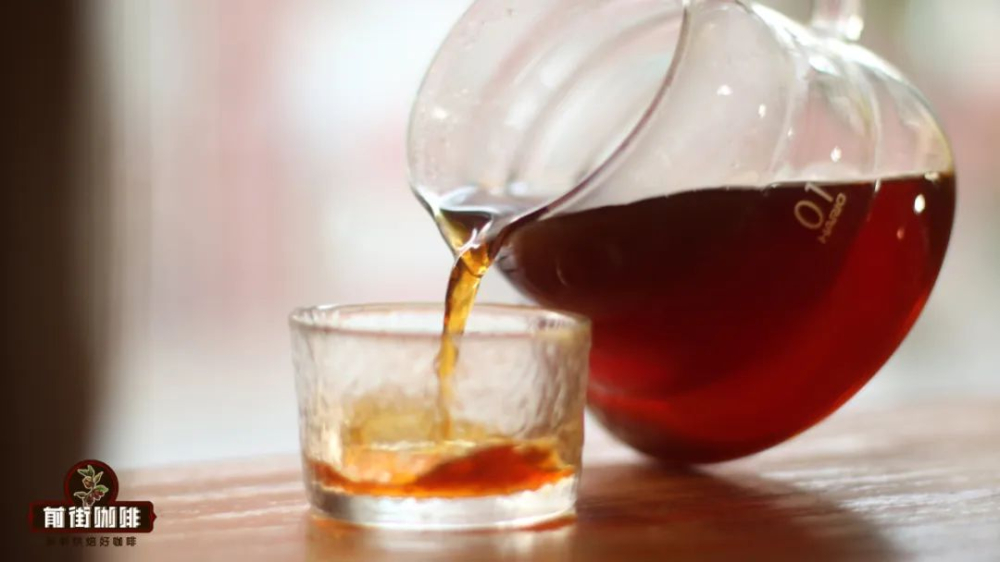
But this is not to say that cold brew is not as good as pour-over. Qianjie is only explaining the reasons why they feel different~ It has its own advantages! After a long fermentation, cold brew carries a specific fermented wine aroma, and combined with its sweet-and-sour taste it is like berry wine, and very smooth. This is a kind of impression that pour-over cannot express. Otherwise, why would merchants single out cold brew for sale instead of just selling pour-over~ Finally, which friends had the same answer as Qianjie? Raise your hands~~

Light Roast Pour-Over Floral Coffee Beans Recommendation: Qianjie Yirgacheffe Gedeo Dingding, Qianjie Panama Hacienda La Esmeralda Green Label Geisha Coffee Beans, QianjiePanama Butterfly Coffee Beans
Daily medium-light roast Yirgacheffe pour-over floral coffee bean recommendation, Qianjie Yirgacheffe Guddina, light roast brings the signature white floral notesAromatic, with lemon-citrus fruit notes and a refreshing floral tea note; bright and crisp on the palate. Great value and an ideal entry-level pour-over coffee with floral and fruity notesAn unrivalled choice.
Moka pot, home espresso, and espresso-based milk drinks like latte — recommended beans: Qianjie Classic Espresso Blend, using BrazilianWest, with Mandheling Arabica and a small amount of Vietnamese Robusta fully blended, delivering a rich and outstanding espressocrema; overall style is rich and memorable. Qianjie Brazil Queen's Estate coffee beans and Qianjie Classic Espresso Blend coffee beans are both mochaA highly recommended option for pot-style espresso machines.
Fruity-floral signature espresso latte bean recommendation: Qianjie Strawberry Candy espresso blend, featuring strawberry gummy and rose aromas,Full-bodied sweetness with a grape and almond finish; especially stunning as an iced latte. Made from Costa Rican honey-process beans, PanamaBlended from Panama Geisha coffee beans and select beans from Colombia's Huila region. Not only does it overturn traditional espresso flavor, the cremaalso performs well, with impressive showings in creative specialty drinks.
Now available on Taobao store「 Qianjie Coffee 」To purchase the above coffee beans, Qianjie Coffee offers dozens of selected single-origin pour-over and espresso coffee beans from around the world. Qianjie CoffeeQianjie Coffee is a veteran specialty coffee roaster; beans are freshly roasted within 5 days, with consistent quality and highly competitive pricesGreat value, ships within 24 hours. Qianjie Coffee is recommended by many coffee lovers and platforms.
Taobao Qianjie Coffee Link: https://qianjiecoffee.taobao.com
Or search our shop directly on Taobao 「Qianjie Coffee」
Qianjie Coffee Store Address: 315 Donghuadong Road, Yuexiu District, Guangzhou

Site Recommendations: 耶加雪菲 花魁咖啡 瑰夏咖啡 波旁咖啡 蓝山咖啡 天堂鸟咖啡豆 曼特宁咖啡豆 PWN黄金曼特宁 星巴克菜单 咖啡豆种类
Please indicate the source when reprinting.
2026-08-16 14:54:28
