Walking into a specialty coffee shop, seeing Yunnan beans on the menu is no longer anything new—most of the time they are collectively referred to as Yunnan small-bean coffee. Small-bean coffee is actually another name for Arabica, so named because it bears the smallest fruit among the three major native species. But the Arabica grown in Yunnan today is no longer the same as the batch of coffee trees introduced by missionaries and border residents in the early twentieth century; both the varietal structure and the cultivation methods have changed.

As the quality of Yunnan coffee beans has improved, most specialty coffee shop menus have added a Yunnan bean option, and they are generally collectively referred to as Yunnan small-bean coffee. This inevitably makes one wonder: what kind of coffee is called small-bean coffee? And what exactly is Yunnan small-bean coffee?

What is small-bean coffee?
Small-bean coffee is another name for Arabica, and the main reason Arabica is called small-bean coffee is that among the three major native coffee species, it produces the smallest fruit (note: this refers to the size of the coffee fruit, not the size of the coffee bean inside the fruit).
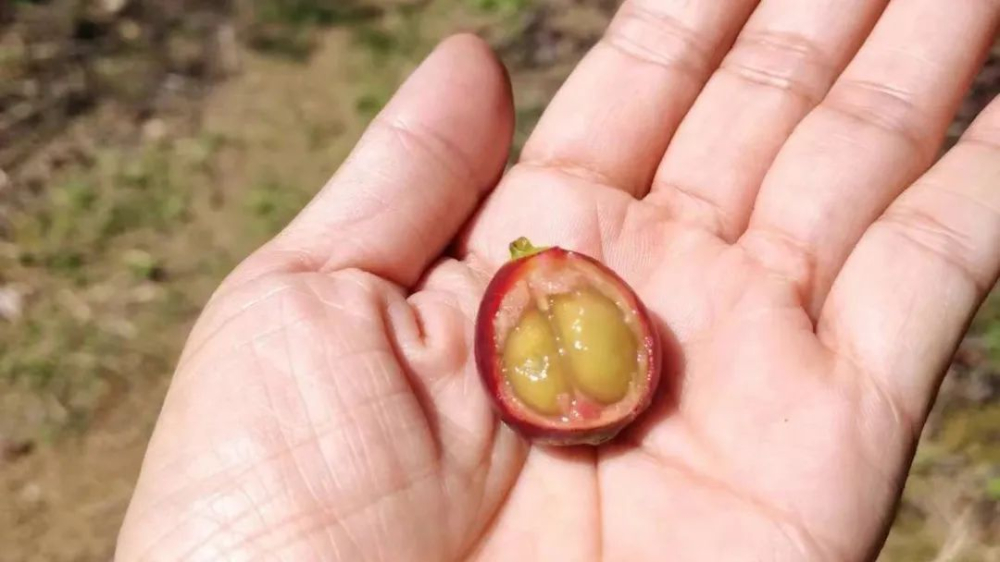
By now everyone roughly understands: Yunnan small-bean coffee refers to Arabica coffee grown in Yunnan, right? Right! But the Yunnan small-bean coffee of the past and the Yunnan small-bean coffee of today are somewhat different.
The Yunnan small-bean coffee that is not the same
In the early 20th century, coffee entered Yunnan Province by two routes. One route was introduced from Vietnam by French missionaries, who planted it in Zhukula Village, Binchuan County, and taught the local villagers how to grind and brew it. The other route was introduced by Jingpo border residents into Nongxian Village, Ruili County. Because the coffee trees' red fruits were pleasing to the eye, the coffee trees at that time were planted in residents' courtyards as ornamental landscape plants. At this time coffee had not yet formed any particular recognition in China, and the planting area was relatively small.

It was not until early 1952 that experts conducting social surveys identified the red fruits grown in farmers' courtyards as the "small-bean coffee" mostly produced in South America. They immediately purchased a large quantity of fresh fruit and brought it back to Lujiangba, Baoshan City, to begin breeding and cultivation, and established China's first small-bean coffee planting base there.
Thanks to Yunnan's superior geography and suitable climate, small-bean coffee cultivation was a great success, developing a unique flavor profile of "strong but not harsh, fragrant but not bitter, with a slight fruity aroma," and was well received by the international market. At this time, China was in the stage of developing a planned economy after the founding of the PRC, and existed as a coffee supply region for the Soviet Union and Eastern European countries (Cuba supplied sugar), which promoted the development of Baoshan coffee, with the planting area reaching more than 50,000 mu. At this point, Yunnan small-bean coffee made its name; when people spoke of Yunnan small-bean coffee at this time, they meant Arabica varieties such as Typica and Bourbon grown in Yunnan.

The good times did not last long. With the deterioration of Sino-Soviet relations in the 1960s and 1970s, the role of supplying coffee beans to the Soviet Union ceased to exist, and Yunnan's coffee planting industry gradually faded away. The term "Yunnan small-bean coffee" began against this background.
Even today, the "old varieties" of Yunnan are almost nowhere to be seen on the market, replaced by "new varieties" that have inherited the title of "Yunnan small-bean coffee."
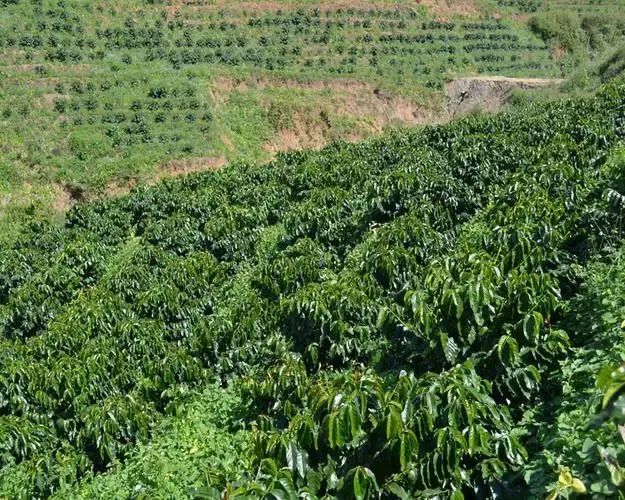
In the 1980s, the world's major coffee industries suffered large-scale production reductions due to coffee leaf rust, and major coffee buyers needed to develop new, undeveloped coffee-producing regions. In 1988, Nestlé hoped to purchase a batch of cheap raw coffee beans for making instant coffee, so it vigorously promoted the development of Yunnan's coffee agriculture, introducing Catimor 7963 from the Portuguese Coffee Rust Research Center (CIFC) for trial planting, and in the following years continuously introduced different Catimors to try cultivating them, but later Catimors never matched the yield of the original 7963.
These Catimors were born for disease resistance and as raw material for instant coffee, so there were no great requirements for flavor, to the point that when discussing flavor one could hardly avoid such less-than-ideal descriptors as low acidity, nuts, cocoa, and earthy notes. What was gained in exchange was extremely high yield and strong disease resistance; under the same management level, Typica yields about one-third of Catimor, which is also why many Typica and Bourbon coffee beans are priced higher.

Catimor
Catimor is a cross between Caturra and Timor. Caturra is a pure-blooded Arabica variety, while Timor is a natural hybrid of Arabica and Robusta, so from the perspective of genetic identification, Catimor, with 3/4 Arabica ancestry, naturally belongs to the Arabica species. And precisely because it has 1/4 Robusta genes, its fruit production is greater than that of ordinary Arabica, and it is easy to grow and not prone to disease. The drawbacks are also obvious: the book The Craft of Specialty Coffee points out that coffee from Asian production regions carries a bit of a "devil's aftertaste," and the reason lies precisely here.

This wave of replacement reached its climax around 2010–2011, when the price of Brazilian coffee beans peaked; during this period Yunnan coffee beans reached a historic peak but then quickly faded.
To this day, Catimor alone accounts for ninety percent of Yunnan's total output. Today's Yunnan small-bean coffee has fully inherited the name of the original Yunnan old-variety Arabica and become synonymous with Yunnan Catimor. The coffee farmers who still insist on growing "old varieties" such as Typica and Bourbon today do so more because of the twists and turns of this varietal transformation.
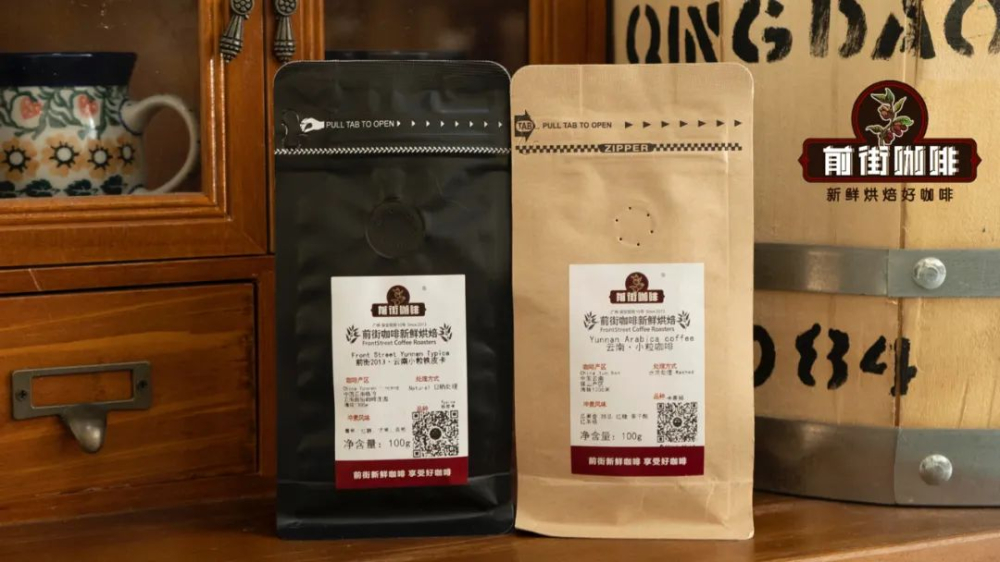
So, to taste the most representative Chinese specialty coffee flavor of today, Qianjie Yunnan small-bean coffee is the first choice, because its variety is the most common local Catimor, and it uses washed processing and medium roasting, allowing you to most directly experience the true flavor of the region; if you want to drink the classic small-bean coffee taste, then you must buy Qianjie 2013 Sun-Dried Typica—it is grown in a good spot at 1,300 meters elevation at Qianjie Manor, and after medium roasting it presents a balanced profile of nuts, dried apricots, chocolate, and black tea.

Light Roast Pour-Over Floral Coffee Beans Recommendation: Qianjie Yirgacheffe Gedeo Dingding, Qianjie Panama Hacienda La Esmeralda Green Label Geisha Coffee Beans, QianjiePanama Butterfly Coffee Beans
Daily medium-light roast Yirgacheffe pour-over floral coffee bean recommendation, Qianjie Yirgacheffe Guddina, light roast brings the signature white floral notesAromatic, with lemon-citrus fruit notes and a refreshing floral tea note; bright and crisp on the palate. Great value and an ideal entry-level pour-over coffee with floral and fruity notesAn unrivalled choice.
Moka pot, home espresso, and espresso-based milk drinks like latte — recommended beans: Qianjie Classic Espresso Blend, using BrazilianWest, with Mandheling Arabica and a small amount of Vietnamese Robusta fully blended, delivering a rich and outstanding espressocrema; overall style is rich and memorable. Qianjie Brazil Queen's Estate coffee beans and Qianjie Classic Espresso Blend coffee beans are both mochaA highly recommended option for pot-style espresso machines.
Fruity-floral signature espresso latte bean recommendation: Qianjie Strawberry Candy espresso blend, featuring strawberry gummy and rose aromas,Full-bodied sweetness with a grape and almond finish; especially stunning as an iced latte. Made from Costa Rican honey-process beans, PanamaBlended from Panama Geisha coffee beans and select beans from Colombia's Huila region. Not only does it overturn traditional espresso flavor, the cremaalso performs well, with impressive showings in creative specialty drinks.
Now available on Taobao store「 Qianjie Coffee 」To purchase the above coffee beans, Qianjie Coffee offers dozens of selected single-origin pour-over and espresso coffee beans from around the world. Qianjie CoffeeQianjie Coffee is a veteran specialty coffee roaster; beans are freshly roasted within 5 days, with consistent quality and highly competitive pricesGreat value, ships within 24 hours. Qianjie Coffee is recommended by many coffee lovers and platforms.
Taobao Qianjie Coffee Link: https://qianjiecoffee.taobao.com
Or search our shop directly on Taobao 「Qianjie Coffee」
Qianjie Coffee Store Address: 315 Donghuadong Road, Yuexiu District, Guangzhou

Site Recommendations: 耶加雪菲 花魁咖啡 瑰夏咖啡 波旁咖啡 蓝山咖啡 天堂鸟咖啡豆 曼特宁咖啡豆 PWN黄金曼特宁 星巴克菜单 咖啡豆种类
Please indicate the source when reprinting.
2026-08-23 17:41:37
