Getting started with pour-over coffee isn't hard—just gather a gooseneck kettle, filter paper, dripper, and ground coffee, and you can begin. What really leaves people indecisive is often the dripper. The wedge-shaped dripper took shape when filter paper was invented in the early 20th century, and its bottom comes in single-hole, double-hole, and triple-hole versions; the fewer the holes, the slower the flow rate, and the longer the extraction time accordingly. The conical dripper's coffee bed forms an inverted triangle—thick in the middle and thin around the edges—and the design of the dripper's grooves likewise affects how fast the water flows. When brewing beans with a balanced flavor profile, choosing a single-hole wedge-shaped dripper to slow the flow rate is a common practice.

Coffee Drippers – An Important Part of Pour-Over Coffee
With the arrival of the third wave of coffee and the rise of single-origin specialty coffee, drip coffee—that is, pour-over coffee—has grown increasingly popular, starting in Japan. Entering the world of pour-over coffee isn't difficult; the equipment you need is roughly a gooseneck kettle, filter paper (or a metal filter), a dripper, and ground coffee. Among these, drippers have become an object of attention for many enthusiasts due to their wide variety. So today, Qianjie will talk about the advantages of the common types of drippers, which also serves as a reference for newcomers.
Types of Coffee Drippers
Since coffee filter paper and drippers were invented in the early 20th century, after a hundred years of evolution and improvement, today's drippers and filter papers on the market not only come in diverse shapes and different materials, but also affect flow rate and extraction time, causing the coffee's taste to differ under each device.

1. Wedge-shaped Dripper (Trapezoid Dripper, Trapezoidal Dripper)
The bottom of the wedge shape usually has one, two, or three holes, and the overall flow rate is slower, so the coffee's extraction time will be longer. Note that the filter paper and dripper need to fit together properly; before brewing, first wet the folded filter paper with a small amount of hot water, and try to ensure it clings tightly to the bottom and edges of the dripper.

This fan-shaped design was conceived when Melitta Bentz created coffee filter paper in 1908. Initially all were single-hole designs, and only later improvements brought versions with more holes. The number of holes directly determines the flow rate—the more holes, the faster the coffee liquid flows—so each person can choose according to their own coffee needs. For example, when brewing Qianjie Blue Mountain No. 1, we want to highlight the coffee's balanced feel by slowing the brewing flow rate, so we choose a single-hole wedge-shaped dripper for extraction.

Conical Dripper
Besides the wedge shape, the most commonly seen on the market is the conical dripper. The biggest difference between the two is the layout of the coffee grounds: the wedge-shaped dripper's coffee bed is uniformly thick throughout, while the conical dripper's coffee bed looks like an inverted triangle from the side—thick in the middle and thin around the edges. Most conical differences lie in the design of the dripper body's grooves; the grooves are channels that help the coffee liquid flow into the cup, so the groove design also affects the flow rate.

For example, the widely recommended KONO Meimon dripper's grooves extend only halfway down the body or less; where there are no grooves, the filter paper clings to the body, using something like a siphon effect to extract the coffee, resulting in a slower flow rate. It suits coffees that pursue a rich mouthfeel—first choices include Qianjie PWN Golden Mandheling, Qianjie Queen's Manor, and Qianjie Brazil Cerrado, which have medium-to-dark roast profiles;

Another dripper that baristas highly recommend, the Hario V60, has grooves extending over the entire body in a spiral pattern, and comes in multiple versions including resin, glass, plastic, metal, and ceramic. With the V60, it's recommended to pair it with thinner filter paper to avoid clogging and water pooling during brewing; combined with the spiral grooves and the large opening at the bottom of the cup, it speeds up the flow rate and prevents over-extraction. The resulting coffee tastes brighter and cleaner, and floral-and-fruity coffees can better express their layers. The V60 is well suited to coffees that are bright, fruity, or floral, such as Qianjie Little Tomato (cherry tomato; berry flavor), Qianjie Huakui (creamy strawberry; guava flavor), and Qianjie Emerald Red Label Geisha (jasmine; mango; honey flavor).

Of course, with drippers blooming in diversity today, besides traditional styles, various innovative designs have also gained countless fans through world-class competitions—such as the Origami dripper, which combines good looks with playability. The Origami dripper, also known as the folding-paper dripper, has a very big advantage: it is compatible with both conical filter paper and cake filters, meaning one device can satisfy two different brewing experiences.
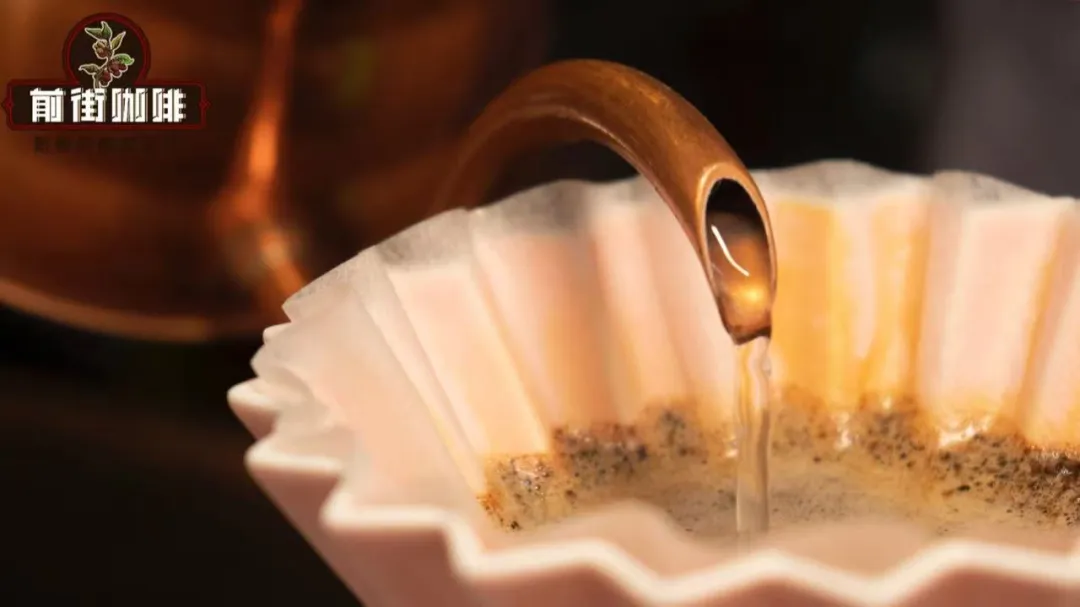
When the Origami dripper is paired with conical filter paper, its 20 ridges serve to support and channel the flow; compared with the V60, its drainage is faster and it better expresses a coffee's aroma, acidity, and cleanliness—very suitable for brewing washed floral coffees like Qianjie Sidamo Alo Village; when the Origami dripper is paired with cake filter paper, its creases fit perfectly into the dripper's grooves, increasing the dripper's immersion capability. Plus, cake filter paper has a flat-bottom structure, so the coffee bed forms an even thickness, which better enhances a coffee's body, sweetness, and finish—suitable for brewing natural-process beans like Qianjie Hamasho and Qianjie Huakui.

Wave Dripper (Cake Dripper)
The wave dripper is a KALITA patent; the filter paper used with it has creases like cupcake paper, so it's also called the cake dripper—but the English name is "Wave," and more people call it the "wave dripper." The wave dripper uses the filter paper's creases in place of flow-channeling grooves; because the area touching the dripper body is smaller and the bottom is flat, once hot water rushes into the coffee bed it spreads evenly and then permeates downward—an easy one for both beginners and veterans to master. In recent years, wave drippers are often seen in pour-over competitions, and the reason its market share isn't that high is that the matching filter paper is relatively expensive—each sheet costs about twice as much as ordinary filter paper, which is a small drawback.

Because the cake dripper leans more toward immersion extraction, it better highlights a coffee's roundness and full-bodied mouthfeel. It's recommended to pair it with fruity medium-roast coffee beans, such as the popular Qianjie Xizhua (passion fruit; grape flavor), Qianjie Strawberry Candy (rose; berry juice flavor), and Qianjie Blackberry (floral; dried blueberry)—under the flat-bottom plus wave-pattern design, they will present characteristics like fruit wine.

Metal Dripper
Coffee filtered through filter paper is cleaner and brighter, while metal material, because its gaps are larger, can retain the coffee's oils, so the body and mouthfeel are higher than coffee brewed with filter paper. The advantage of metal material is that as long as it's cleaned thoroughly it can be used repeatedly, while the obvious drawback is that the coffee's fine powder easily gets flushed into the cup along with the liquid, causing coffee grounds to settle at the bottom after drinking—and in serious cases it can even affect the whole cup's taste. Solving this problem requires a fine-powder filter to make the coffee a bit purer.

Differences in Dripper Materials
The difference in materials lies in specific heat—ceramic, resin, plastic, stainless steel, metal, and so on—which is the effect of retaining temperature. For example, ceramic is made thicker, and its temperature control effect is better than plastic's, so it maintains temperature better during coffee extraction. If you notice the coffee tastes more bitter or more flavorless because you changed materials, you may need to adjust the water temperature or grind to find the best parameters for the new equipment.

Material also affects price. If you want to brew a good cup of coffee, what you need more is to understand your equipment and practice more—it's not that the more expensive it is, the better it tastes. Let's all practice a lot together!

Light Roast Pour-Over Floral Coffee Beans Recommendation: Qianjie Yirgacheffe Gedeo Dingding, Qianjie Panama Hacienda La Esmeralda Green Label Geisha Coffee Beans, QianjiePanama Butterfly Coffee Beans
Daily medium-light roast Yirgacheffe pour-over floral coffee bean recommendation, Qianjie Yirgacheffe Guddina, light roast brings the signature white floral notesAromatic, with lemon-citrus fruit notes and a refreshing floral tea note; bright and crisp on the palate. Great value and an ideal entry-level pour-over coffee with floral and fruity notesAn unrivalled choice.
Moka pot, home espresso, and espresso-based milk drinks like latte — recommended beans: Qianjie Classic Espresso Blend, using BrazilianWest, with Mandheling Arabica and a small amount of Vietnamese Robusta fully blended, delivering a rich and outstanding espressocrema; overall style is rich and memorable. Qianjie Brazil Queen's Estate coffee beans and Qianjie Classic Espresso Blend coffee beans are both mochaA highly recommended option for pot-style espresso machines.
Fruity-floral signature espresso latte bean recommendation: Qianjie Strawberry Candy espresso blend, featuring strawberry gummy and rose aromas,Full-bodied sweetness with a grape and almond finish; especially stunning as an iced latte. Made from Costa Rican honey-process beans, PanamaBlended from Panama Geisha coffee beans and select beans from Colombia's Huila region. Not only does it overturn traditional espresso flavor, the cremaalso performs well, with impressive showings in creative specialty drinks.
Now available on Taobao store「 Qianjie Coffee 」To purchase the above coffee beans, Qianjie Coffee offers dozens of selected single-origin pour-over and espresso coffee beans from around the world. Qianjie CoffeeQianjie Coffee is a veteran specialty coffee roaster; beans are freshly roasted within 5 days, with consistent quality and highly competitive pricesGreat value, ships within 24 hours. Qianjie Coffee is recommended by many coffee lovers and platforms.
Taobao Qianjie Coffee Link: https://qianjiecoffee.taobao.com
Or search our shop directly on Taobao 「Qianjie Coffee」
Qianjie Coffee Store Address: 315 Donghuadong Road, Yuexiu District, Guangzhou

Site Recommendations: 耶加雪菲 花魁咖啡 瑰夏咖啡 波旁咖啡 蓝山咖啡 天堂鸟咖啡豆 曼特宁咖啡豆 PWN黄金曼特宁 星巴克菜单 咖啡豆种类
Please indicate the source when reprinting.
2026-08-29 10:01:22
