The town of Rivas in the Brunca region is located about 150 kilometers southeast of San José, the capital of Costa Rica, a three-and-a-half-hour drive that requires crossing mountains at elevations of 3,000 to 3,400 meters. It has long been considered incapable of producing good coffee. Treasure Estate was founded by owner Regulo, who began planting from the lowest point at about 1,200 meters and divided the land into five coffee farms according to altitude and slope orientation. In 2002, when international coffee futures prices hit rock bottom, Costa Rica set off a micro-mill revolution. With no precedent to follow, he invested tens of thousands of dollars to purchase Penagos micro honey processing equipment, betting his family's future on the unknown.
Introduction to Brunca Treasure Estate Coffee
Rivas, in the Brunca region, is a remote coffee-producing area located about 150 kilometers southeast of San José, the capital of Costa Rica, a three-and-a-half-hour drive that passes through elevations of 3,000 to 3,400 meters. It is a region long considered “incapable of producing good coffee.”
This estate, which has been in operation for about thirty years, was founded by current owner Regulo Gerard. It was originally a hillside used for livestock grazing, with the lowest point at about 1,200 meters and the highest reaching up to 2,000 meters.
He began planting coffee from the lowest point and divided the land into five coffee farms according to altitude and slope orientation. Over the following 20-plus years, he sold coffee cherries to the town's processing plant, just like most coffee farmers at the time, devoting all his energy to caring for the coffee trees and his family.
But such income was not good, and also unstable. It was not until 2002, when international coffee futures prices plummeted to rock bottom, that Costa Rica began its “micro-mill revolution.” Many farmers hoped that their own micro-lot beans would catch the eye of international specialty buyers and break free forever from the dreaded cycle of commercial coffee prices.
With no one to emulate and no international specialty buyers at all, Regulo resolutely decided to invest tens of thousands of dollars to purchase a set of “Penagos” micro honey processing equipment (and named this new micro-mill — Rivense). He staked his entire coffee business and his family's future on the unknown.
Honey Processing Method
The “honey processing method” first appeared in Central America in 2002, and over more than a decade, everyone's techniques have become increasingly mature. It can even be divided by degree into four types: white honey, yellow honey, red honey, and black honey.
The so-called depth of honey processing refers to the “degree of browning and fermentation of the mucilage layer.” White honey is the lightest and closest to the washed processing method, so it is also called mechanical washing, while black honey is the deepest degree of honey processing, with the highest risk and difficulty. A good black honey, in addition to a rich honeyed sweetness, can also carry a hint of sun-dried fermentation aroma.
In the honey processing method, white honey retains about 20% of the fruit pulp, yellow honey 40%, red honey 60%, and black honey about 80%. Compared with other honey processing methods, white honey is closer to the washed method, with a cleaner and more transparent mouthfeel; black honey is relatively closer to the natural method, with more pronounced sweetness and richer flavor. Honey processing requires skilled fermentation techniques, because honey processing ferments with the fruit pulp, and the fermentation speed is difficult to control. If not handled well, it can easily cause over-fermentation or uneven fermentation, or even produce an alcoholic taste. Therefore, being able to successfully use honey processing to produce a beautiful and stable flavor in every batch of beans depends not only on the fermentation control technology of the processing plant, but also on correctly determining which proportion of honey processing is suitable for each type of bean, which also greatly tests the experience of the processing plant.
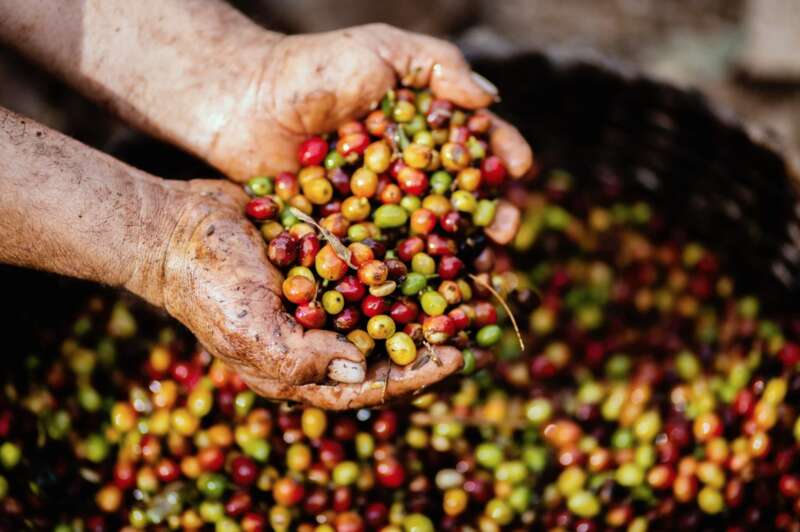
La Guaca Treasure Estate
■ Processing Plant: Rivense Processing Plant
■ Region: Brunca
■ Grade: SHB
■ Producer: Regulo Gerardo Urena Chacon
■ Processing Method: Black Honey Processing
■ Variety: Catuai
■ Altitude: 1,600 meters
■ Flavor: Dry aroma has plum, nut, and caramel notes. On the palate, there are creamy nut and fruit wine notes, the sweet-tartness of red-fleshed plum, and a sweetness like red dates. The body is thick and full, with a finish of fresh green grass aroma.

Light Roast Pour-Over Floral Coffee Beans Recommendation: Qianjie Yirgacheffe Gedeo Dingding, Qianjie Panama Hacienda La Esmeralda Green Label Geisha Coffee Beans, QianjiePanama Butterfly Coffee Beans
Daily medium-light roast Yirgacheffe pour-over floral coffee bean recommendation, Qianjie Yirgacheffe Guddina, light roast brings the signature white floral notesAromatic, with lemon-citrus fruit notes and a refreshing floral tea note; bright and crisp on the palate. Great value and an ideal entry-level pour-over coffee with floral and fruity notesAn unrivalled choice.
Moka pot, home espresso, and espresso-based milk drinks like latte — recommended beans: Qianjie Classic Espresso Blend, using BrazilianWest, with Mandheling Arabica and a small amount of Vietnamese Robusta fully blended, delivering a rich and outstanding espressocrema; overall style is rich and memorable. Qianjie Brazil Queen's Estate coffee beans and Qianjie Classic Espresso Blend coffee beans are both mochaA highly recommended option for pot-style espresso machines.
Fruity-floral signature espresso latte bean recommendation: Qianjie Strawberry Candy espresso blend, featuring strawberry gummy and rose aromas,Full-bodied sweetness with a grape and almond finish; especially stunning as an iced latte. Made from Costa Rican honey-process beans, PanamaBlended from Panama Geisha coffee beans and select beans from Colombia's Huila region. Not only does it overturn traditional espresso flavor, the cremaalso performs well, with impressive showings in creative specialty drinks.
Now available on Taobao store「 Qianjie Coffee 」To purchase the above coffee beans, Qianjie Coffee offers dozens of selected single-origin pour-over and espresso coffee beans from around the world. Qianjie CoffeeQianjie Coffee is a veteran specialty coffee roaster; beans are freshly roasted within 5 days, with consistent quality and highly competitive pricesGreat value, ships within 24 hours. Qianjie Coffee is recommended by many coffee lovers and platforms.
Taobao Qianjie Coffee Link: https://qianjiecoffee.taobao.com
Or search our shop directly on Taobao 「Qianjie Coffee」
Qianjie Coffee Store Address: 315 Donghuadong Road, Yuexiu District, Guangzhou

Site Recommendations: 耶加雪菲 花魁咖啡 瑰夏咖啡 波旁咖啡 蓝山咖啡 天堂鸟咖啡豆 曼特宁咖啡豆 PWN黄金曼特宁 星巴克菜单 咖啡豆种类
Please indicate the source when reprinting.
2020-06-26 16:37:34
