Coffee beans need to be roasted before they can become a drinkable ingredient, and the degree of roast directly rewrites the flavor in the cup. Light roast preserves the bean's most original character, with the most vivid acidity, and is also the roast level commonly used for cupping; medium roast, while drawing out aroma, balances acidity and body; the darker the roast, the fuller the body, with acidity decreasing and bitterness increasing. When brewing medium-dark roasted beans, the trade-off between water temperature and grinding determines whether this cup of coffee is burnt and bitter or has a sweet aftertaste, and the difference in acidity between Yirgacheffe and Mandheling is also hidden in this combination of roast level and origin.
Coffee beans cannot become a drinkable ingredient without roasting, and the degree of roast directly rewrites the flavor in the cup. Light roast preserves the bean's most original character, with the most vivid acidity, and is also the roast level commonly used for cupping; medium roast, while drawing out aroma, balances acidity and body; the darker the roast, the fuller the body, with acidity decreasing and bitterness increasing. When brewing medium-dark roasted beans, the trade-off between water temperature and grinding determines whether this cup of coffee is burnt and bitter or has a sweet aftertaste.

Coffee beans need to be roasted before they can become a drinkable ingredient, and then ground and brewed to finally become a cup of coffee with a sweet flavor and rich taste. And different roasted coffee beans have different characteristics, and the roast levels are roughly divided into: light roast, medium roast and dark roast. The darker the roast, the fuller the flavor and body of the coffee beans, the lower the acidity, and the higher the bitterness. Qianjie takes you to learn how to brew a cup of medium-dark roasted coffee, take all the techniques and so on!
Coffee roasting degree depends on the color presented in appearance: light, medium or dark, although this is not the most accurate method to judge the roast level, some coffees are naturally darker or lighter than others, but this is still the most convenient way to judge the roast level. When buying coffee, you will expect coffees of different roast levels to have their own characteristics.
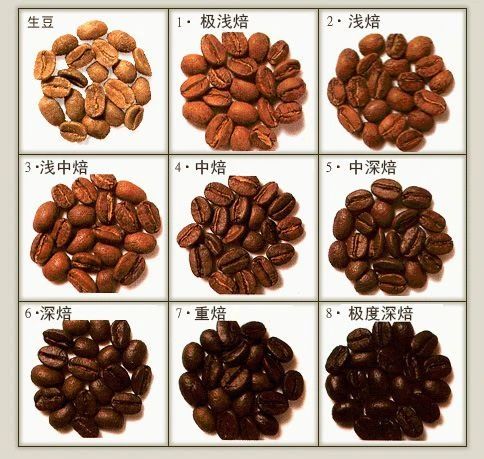
Light roast best preserves the original characteristics of coffee beans
Light roast has a light coffee-colored, tan appearance and the beans after roasting have less oil, and it is the coffee with the most obvious and vivid acidity among all roast levels. When coffees grown in different regions are presented as light roast, they can best show the quality of that coffee, and most of what you taste is the original flavor of the coffee, which is also the reason why light roast beans are commonly used for cupping tests.
Medium roast has balanced acidity and body
Medium roast coffee has a darker brown appearance than light roast, and the coffee's oils may also be visible on the surface. This roast level allows the roaster to draw out the coffee's flavor and aroma while also balancing acidity and body, and you can likewise taste the coffee's original flavor from medium roast coffee, but the coffee's vivid acidity will be replaced by a full body due to the roasting process.

Dark roast presents a full body and intense flavor
Dark roast has a dark brown or even nearly black appearance, presenting a chocolate-like flavor, and the coffee's oils can be seen on the surface. Dark roast coffee has rich oils in appearance. When tasting dark roast coffee, you can hardly taste anything but the flavors produced during roasting, and the vivid acidity of light roast coffee will be replaced by the body of dark roast. After coffee is dark roasted, its original flavor almost disappears, and it is hard to taste the regional flavor of the coffee, or the flavor characteristics of the batch processing, in dark roast coffee.

Everyone's preferred roast level is very different, and different roast levels present different characteristics of coffee. Knowing these can help you better understand coffees of different natures, whether you prefer light/medium/dark roast. You can try different kinds of coffee paired with different roast levels, and only after trying can you know what roast level of coffee you like!
Grinding coffee beans is the first step in brewing coffee, but it is also a step where many people easily fail, either grinding too fine or too coarse, indirectly affecting the coffee's taste. To accurately master the coarseness of coffee grounds, it is recommended to use an electric grinder that can adjust the setting, to precisely control the grind size. Taking the Little Fuji grinder as an example, the best coarseness for pour-over coffee grounds is between 3-4 on the dial, and fine granulated sugar can be used as a reference.

Taking the Little Fuji grinder as an example, the best coarseness for pour-over coffee grounds is between 3-4 on the dial, with a sieve pass rate of 80%
Simply put:
Light roast Qianjie Yirgacheffe Gudingding: needs fine grinding, 90-91°C water temperature
Dark roast Qianjie Mandheling: needs medium grinding-coarse grinding, water temperature around 88°C is fine

Different brewing methods and habits all have their suitable degree of grind coarseness. Distinguished by brewing method, Espresso is suitable for fine grinding, filter pour-over and siphon are suitable for medium grinding, and the French press is suitable for coarse grinding. If considered in terms of the length of time the coffee grounds are soaked in water, the longer the time, the coarser the grind particles should be; the shorter the time, the finer the grind particles should be. But this is only a general principle, so you might as well try more often in daily life, and you will surely find the brewing method and habit that suits you best.
If the grind coarseness is uneven, since fine coffee powder is extracted by water faster than coarse coffee powder, there will be the problem that the extraction time cannot be controlled, that is, in the same amount of time, when the fine coffee powder has already been over-extracted because it has been soaked in water for too long, the coarse coffee powder is under-extracted because the soaking time is not enough. Such coffee will certainly not be a good cup of coffee.
Below are four techniques to share.
First: low (low temperature)
Medium-dark roasted beans are recommended to be brewed at 86 to 88°C. Lowering the water temperature a little can slow down the extraction speed and reduce the extraction of bitter substances.

Second: gentle (the water stream should be gentle)
Inject a gentle stream of water to reduce the impact of the water stream on the coffee bed. Control the water level height in the dripper, and after blooming, slowly pour water from a lower height, then let the coffee grounds in the dripper be as if they are being soaked. This can slow down the pace of extraction, making it easy to produce coffee with a soft mouthfeel and a solid taste

Third: slow (circle slowly)
Slowly pour the water onto the coffee bed from the inside out and then from the outside in. Circling too fast will increase the stirring effect of the water stream on the coffee, easily making the bitterness of medium-dark roasted beans stronger. Minimize stirring of the coffee bed, and let the coffee's flavor be extracted as much as possible through soaking. This can effectively control bitterness and astringency.

Fourth: coarse (coarse grind)
Coarse grinding can reduce the contact area between coffee grounds and water, making it less likely for the coffee to bring out bitter, miscellaneous and astringent flavors due to high-temperature water at the beginning of brewing. Combined with slow brewing to extend the extraction time, the water temperature in the later stage is lowered, and then the flavor and mouthfeel substances are slowly brought out.

Simply from the extraction principle, for light roast beans, the degree of cell expansion is relatively smaller than for dark roast, and water absorption is somewhat weaker. When water meets the cells, it takes more time to extract the desired substances. Basically, light roast can be finely ground, and dark roast can be coarsely ground. If your coffee becomes bitter and astringent, you can try adjusting the extraction of medium-dark roasted beans through the above points techniques.

Light Roast Pour-Over Floral Coffee Beans Recommendation: Qianjie Yirgacheffe Gedeo Dingding, Qianjie Panama Hacienda La Esmeralda Green Label Geisha Coffee Beans, QianjiePanama Butterfly Coffee Beans
Daily medium-light roast Yirgacheffe pour-over floral coffee bean recommendation, Qianjie Yirgacheffe Guddina, light roast brings the signature white floral notesAromatic, with lemon-citrus fruit notes and a refreshing floral tea note; bright and crisp on the palate. Great value and an ideal entry-level pour-over coffee with floral and fruity notesAn unrivalled choice.
Moka pot, home espresso, and espresso-based milk drinks like latte — recommended beans: Qianjie Classic Espresso Blend, using BrazilianWest, with Mandheling Arabica and a small amount of Vietnamese Robusta fully blended, delivering a rich and outstanding espressocrema; overall style is rich and memorable. Qianjie Brazil Queen's Estate coffee beans and Qianjie Classic Espresso Blend coffee beans are both mochaA highly recommended option for pot-style espresso machines.
Fruity-floral signature espresso latte bean recommendation: Qianjie Strawberry Candy espresso blend, featuring strawberry gummy and rose aromas,Full-bodied sweetness with a grape and almond finish; especially stunning as an iced latte. Made from Costa Rican honey-process beans, PanamaBlended from Panama Geisha coffee beans and select beans from Colombia's Huila region. Not only does it overturn traditional espresso flavor, the cremaalso performs well, with impressive showings in creative specialty drinks.
Now available on Taobao store「 Qianjie Coffee 」To purchase the above coffee beans, Qianjie Coffee offers dozens of selected single-origin pour-over and espresso coffee beans from around the world. Qianjie CoffeeQianjie Coffee is a veteran specialty coffee roaster; beans are freshly roasted within 5 days, with consistent quality and highly competitive pricesGreat value, ships within 24 hours. Qianjie Coffee is recommended by many coffee lovers and platforms.
Taobao Qianjie Coffee Link: https://qianjiecoffee.taobao.com
Or search our shop directly on Taobao 「Qianjie Coffee」
Qianjie Coffee Store Address: 315 Donghuadong Road, Yuexiu District, Guangzhou

Site Recommendations: 耶加雪菲 花魁咖啡 瑰夏咖啡 波旁咖啡 蓝山咖啡 天堂鸟咖啡豆 曼特宁咖啡豆 PWN黄金曼特宁 星巴克菜单 咖啡豆种类
Please indicate the source when reprinting.
2026-08-21 13:42:16
