In recent years, anaerobic processing has frequently appeared on coffee menus. Those who taste it for the first time are often drawn to its strong and distinctive fermented aroma, and the question that follows is: is this flavor added with artificial flavoring? To be clear, anaerobically processed coffee is not a flavored bean. What sets it apart from natural, washed, and honey processing is the added step of controlled fermentation during processing, and the complex, ever-changing aromas come precisely from this step—beans like Sidra are a typical example.
In recent years, in addition to traditional washed and natural processing, anaerobic coffee processing has begun to appear frequently and has become a popular subject of much attention. When many people first encounter anaerobic coffee, they are first drawn to its strong and distinctive fermented flavor, but at the same time questions arise: what does anaerobic processing mean? Why does it taste so different from washed and natural? Some even wonder, "Is anaerobic coffee a flavored bean?"

Qianjie can state clearly to everyone that anaerobically processed coffee is not the "flavored bean" rumored online. It is indeed different from traditional processing methods (natural, washed, honey), and the reason it has complex, ever-changing aromas is mainly that a step of controlled fermentation is added during processing.
As a new processing method, anaerobic processing has a history of only about ten years. According to information from the French specialty coffee supplier Belco, Costa Rican coffee farmer Luis Eduardo Campos was one of the first pioneers to apply anaerobic fermentation to coffee beans. In 2015, Australian barista Sasa Sestic used anaerobically fermented coffee beans in the World Barista Championship and won the title, making the technique widely known and gradually leading to diverse forms.
Anaerobic fermentation involves placing coffee cherries, or beans after the pulp has been removed, into sealed tanks and excluding oxygen, so that carbon dioxide continuously accumulates inside the tank and forms an anaerobic environment, allowing specific microorganisms (such as lactic acid bacteria and yeast) to act, thereby influencing the direction in which sugars, acidity, and aroma develop. Precisely because fermentation is redesigned, anaerobically processed coffee can develop a flavor profile completely different from traditional washed and natural coffees.

In such a low-temperature, high-pressure, and oxygen-free environment, because pectin continues to break down, coffee that undergoes anaerobic fermentation produces higher concentrations of acidity and abundant alcohols and lipids. Among these, the accumulation of lactic acid gives the coffee a silkier, fuller body; various complex lipids promote the development of sweetness and floral aromas; and alcohols are converted into intense ripe-fruit aromas, such as pineapple, strawberry, and passion fruit. Some lots can even show winey notes. This is also why anaerobically processed coffee often tastes bolder than traditionally processed coffee and has a more memorable flavor.

Compared with classic washed and natural processing, anaerobic fermentation itself has no specific standard and depends entirely on the coffee farmer's own approach. In this rapidly changing era, processing methods are becoming more and more refined, and anaerobic fermentation has now developed various "advanced variations," including anaerobic natural, anaerobic washed, anaerobic honey, and double anaerobic layered on top of traditional methods, as well as various upgraded fermentation versions such as carbonic maceration, nitrogen fermentation, and co-fermentation. As for which origin is best at anaerobic coffee, Qianjie believes Colombia is undoubtedly the true enthusiast.
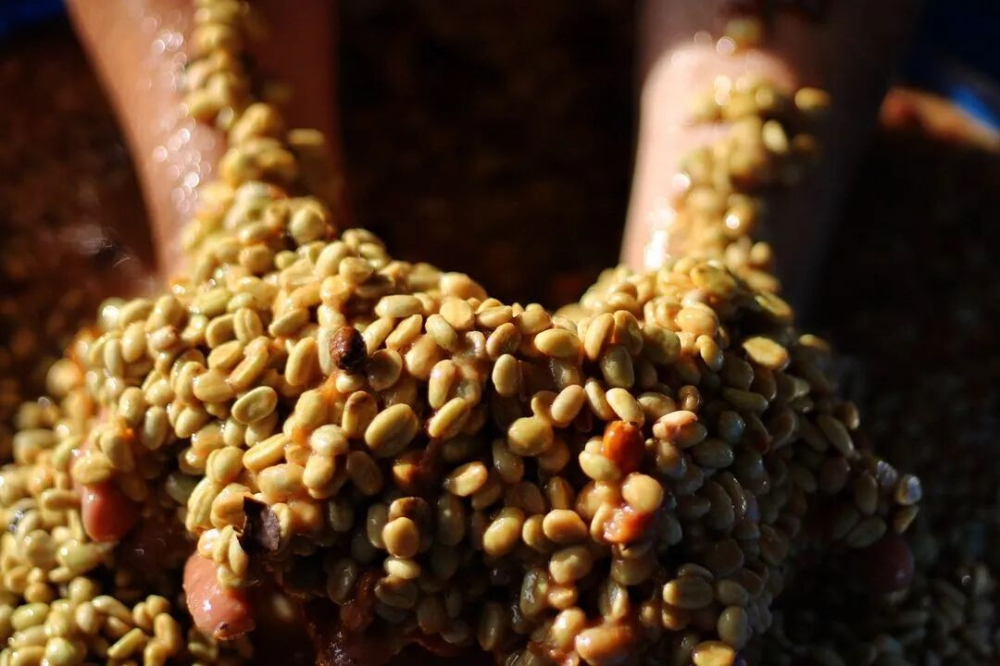
Qianjie Sidra and Qianjie Big Navel from Colombia's Finca División use double anaerobic natural processing (Double Anaerobic Natural). The so-called "double" means the coffee cherries must first undergo two rounds of sealed fermentation before being sent to drying beds. Because the microbial composition and the environment of the two fermentations differ, it can make the coffee richer in taste, with jammy, fermented, and spicy notes becoming very prominent, but at the same time this method has higher requirements for various indicators during production.
Thanks to the estate owner's command of the fermentation process, double anaerobic natural processing allows Qianjie Sidra to develop notes of passion fruit, grape, and apricot preserves; its high-sweetness, low-acidity character has left a deep impression on many people. Qianjie Big Navel, meanwhile, is endowed with multiple aromas such as blackcurrant, spice, pineapple, and blueberry jam, with a full, juicy mouthfeel on entry.

Whenever the flavor of anaerobically processed coffee is discussed, many people's first impression is that it has a strong presence and is memorable in one sip. The various complex and concentrated aromas always lead people to search their memory banks for familiar foods to describe it: some think anaerobic coffee has a mellow mouthfeel similar to red wine; some find it sweet with a fermented taste, much like "Cantonese sausage"; and others have told Qianjie that the coffee smells (and tastes) like "fermented black beans."

In Qianjie's view, anaerobically processed coffee is like durian: those who like it are devoted to it and want another cup after finishing, while those who dislike it turn up their noses and cannot accept a second sip—and the two camps never seem able to convince each other.

Light Roast Pour-Over Floral Coffee Beans Recommendation: Qianjie Yirgacheffe Gedeo Dingding, Qianjie Panama Hacienda La Esmeralda Green Label Geisha Coffee Beans, QianjiePanama Butterfly Coffee Beans
Daily medium-light roast Yirgacheffe pour-over floral coffee bean recommendation, Qianjie Yirgacheffe Guddina, light roast brings the signature white floral notesAromatic, with lemon-citrus fruit notes and a refreshing floral tea note; bright and crisp on the palate. Great value and an ideal entry-level pour-over coffee with floral and fruity notesAn unrivalled choice.
Moka pot, home espresso, and espresso-based milk drinks like latte — recommended beans: Qianjie Classic Espresso Blend, using BrazilianWest, with Mandheling Arabica and a small amount of Vietnamese Robusta fully blended, delivering a rich and outstanding espressocrema; overall style is rich and memorable. Qianjie Brazil Queen's Estate coffee beans and Qianjie Classic Espresso Blend coffee beans are both mochaA highly recommended option for pot-style espresso machines.
Fruity-floral signature espresso latte bean recommendation: Qianjie Strawberry Candy espresso blend, featuring strawberry gummy and rose aromas,Full-bodied sweetness with a grape and almond finish; especially stunning as an iced latte. Made from Costa Rican honey-process beans, PanamaBlended from Panama Geisha coffee beans and select beans from Colombia's Huila region. Not only does it overturn traditional espresso flavor, the cremaalso performs well, with impressive showings in creative specialty drinks.
Now available on Taobao store「 Qianjie Coffee 」To purchase the above coffee beans, Qianjie Coffee offers dozens of selected single-origin pour-over and espresso coffee beans from around the world. Qianjie CoffeeQianjie Coffee is a veteran specialty coffee roaster; beans are freshly roasted within 5 days, with consistent quality and highly competitive pricesGreat value, ships within 24 hours. Qianjie Coffee is recommended by many coffee lovers and platforms.
Taobao Qianjie Coffee Link: https://qianjiecoffee.taobao.com
Or search our shop directly on Taobao 「Qianjie Coffee」
Qianjie Coffee Store Address: 315 Donghuadong Road, Yuexiu District, Guangzhou

Site Recommendations: 耶加雪菲 花魁咖啡 瑰夏咖啡 波旁咖啡 蓝山咖啡 天堂鸟咖啡豆 曼特宁咖啡豆 PWN黄金曼特宁 星巴克菜单 咖啡豆种类
Please indicate the source when reprinting.
2026-11-16 17:32:08
