A cup of pour-over coffee is at least 98% water, so its importance is self-evident, yet most brewing tutorials never deliberately emphasize water, and this parameter thus becomes an open question. Water usually gives the impression of being colorless and tasteless, and beginners often don't care at first, thinking that at home they'll just do whatever is convenient and use tap water straight from the faucet. Over time they discover that even with decent beans, the brewed coffee completely lacks the clear flavors they taste in shops, and the entry is muddy and murky, with no improvement despite repeated adjustments of technique and parameters—the answer is actually hidden in the water.
A cup of pour-over coffee is at least 98% water, showing its importance. In choosing water, most tutorials don't deliberately emphasize it, so this parameter also becomes an open question.

Water generally gives the impression of being colorless and tasteless, so many beginners don't care about this issue at first, thinking that brewing coffee at home should just be as convenient as possible, and thus use tap water straight from the faucet. Over time they discover that even with decent beans, the brewed coffee completely lacks the clear flavors they taste in shops, and the entry is very mixed and murky; at first they think it's a matter of technique or parameters, but when repeated adjustments bring no improvement, they don't realize the answer is hidden in the water.
What does coffee brewed with tap water taste like?
To make the conclusion more convincing, Qianjie today prepared three different coffee beans to try brewing with tap water, namely the slightly acidic Qianjie Kafa Forest, the more bitter Qianjie Golden Mandheling, and the high-sweetness Qianjie Xizhua; their respective roast levels are medium-light, dark, and medium, so they require correspondingly different extraction parameters. As a comparison, Qianjie will also brew another pot using the same scheme with the Nongfu Spring water used for daily brewing, in pairs, and finally taste and record each separately.

Coffee beans: 16g
Water amount: 240g
Water temperature: 93℃, 86℃, 90℃
Grind size: China No. 20 standard sieve pass rate 80%, 70%, 82%
Brewing water: tap water, Nongfu Spring
Technique: three-stage pour
Qianjie Kafa Forest: the Kafa Forest extracted with Nongfu Spring has the fresh sweetness of yellow apricot and the aroma of creamy sunflower seeds, with low acidity and good cleanliness, no prominent bitterness, and after cooling it still carries a full tea charm. The coffee brewed with tap water, although it also has citrus-like fruit acidity, leaves a very obvious raw astringency on the tongue after drinking, with generally weaker aroma and mixed flavors.
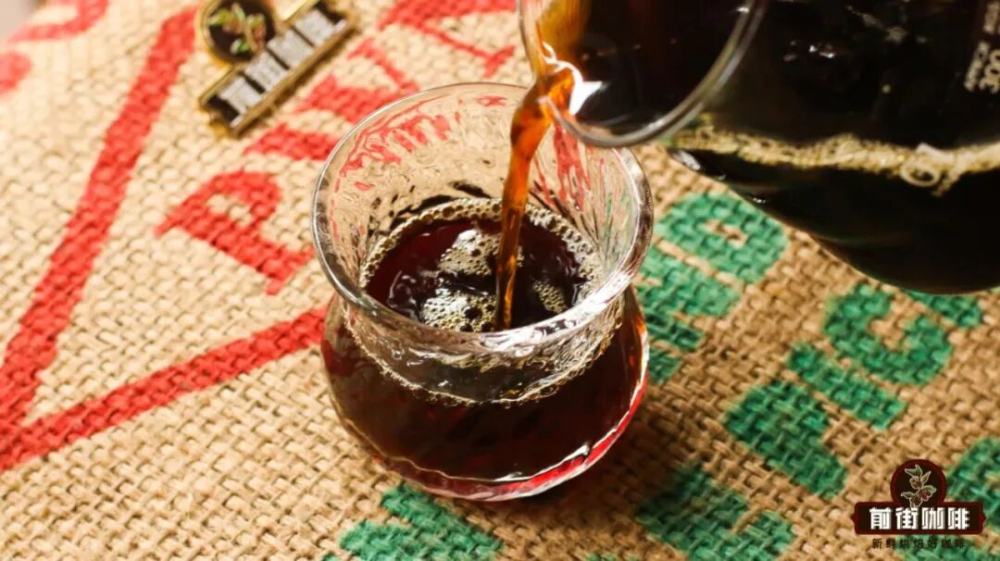
Qianjie Golden Mandheling: the Mandheling brewed with Nongfu Spring has caramel, herbal, and dark chocolate aromas, with moderate bitterness and body; tap water not only aggravates the burnt taste but also brings out more root and woody flavors—after drinking it, you'll pull a bitter melon face.
Qianjie Xizhua: the Nongfu group has bright passion fruit, dried blueberry, and grape sweet-sourness, accompanied by almond aroma and fermentation notes, with complex layers; the tap water group, to be honest, is not hard to drink, because Qianjie likewise tasted the clear sweetness of dark berries and dried fruit, but it is somewhat weaker in richness, and the finish is not as clean as the previous cup.

From the above three sets of records, it is not hard to see that even without professional equipment for measurement, we can clearly taste that coffee brewed with tap water is noticeably inferior to mountain spring water in both flavor and mouthfeel. In other words, no matter what type of coffee bean, tap water is not the best choice for brewing.
Why does coffee brewed with tap water taste bad?
Water all looks the same; if we just drink it, we may not easily find the differences between them, but once unsuitable water is used to brew coffee, the bad taste will be very easy to identify.

Just like brewing wine and making tea, only good water quality can present the mellow aroma of coffee. Theoretically, to brew a perfect cup of coffee, one must first have perfect water, so we often see that competitors in world-class coffee competitions not only pay special attention to brewing water, but in order to better extract the ideal flavor, they also "add ingredients" to the water to concoct a more handy brewing solvent; the secret lies mainly in trace elements.

Water is composed of countless elements; for coffee extraction, the most important are magnesium, calcium, and bicarbonate. In the water we encounter daily, these minerals exist in trace amounts; although not easily noticed, they can directly affect the water's hardness and softness. Water containing an appropriate amount of calcium ions can better dissolve the acidity in coffee, while water with magnesium ions can effectively enhance the release of coffee's sweetness and aroma, so to make coffee taste good, the water must contain appropriate amounts of calcium and magnesium.

Water quality is mainly affected by how much trace minerals the water contains, generally expressed as TDS (total dissolved solids, in ppm). According to the WHO's "Guidelines for Drinking-water Quality," hardness below 200ppm is called soft water, and above 200ppm is hard water, which means the water contains too much calcium and magnesium ions. Generally, hard water is not suitable for brewing coffee, because it makes mixed bitter flavors more obvious.
For coffee brewing water, the SCA recommends a range of 75–250 ppm, with an ideal value of 150ppm. However, in fact, water that more easily brews good-tasting coffee is usually below 100ppm, because TDS data can only represent how much free substance is in the water and cannot clearly indicate what components they are.

Generally speaking, the tap water standards currently adopted in our country mostly fall into the weakly alkaline range, and tap water hardness varies greatly from place to place, with many cities generally on the high side. Extracting with it will probably yield a cup of coffee that is bitter in the front, medicinal in the middle, murky in the finish, and with a sandy mouthfeel.
And although the tap water used by Qianjie today can be classified by TDS readings within the soft water range of 150–180ppm, due to the disinfection process at the plant, it retains trace amounts of chlorine and other chemicals, and drinking it by itself carries a strange odor. When it reacts with the soluble substances in coffee, it brings an indescribable "medicinal water taste."

So to improve the taste of water, many households install filters to remove impurities and odors, making it purer. At this point, to know whether hardness has decreased, we still need to use a dedicated TDS meter, and then brew and compare the taste to know whether extraction has improved. Because some devices do not filter well, even the filtered water may still be unsuitable for brewing coffee; in that case, the best solution is to buy bottled/bucketed drinking water.
What water is best for brewing coffee?
For drinking water, there are many products on the market, and the coffee community often mentions purified water and mineral water as two typical "negative examples."

Among them, purified water has a TDS of about 1ppm; containing almost nothing, it obviously does not have enough minerals to carry coffee's flavor, so it easily leads to under-extraction, higher acidity, and a thin mouthfeel. Mineral water, however, varies greatly in hardness and softness depending on the brand, and the amounts of trace elements also differ; using water with too much mineral content will clearly interfere with coffee flavor. Qianjie once extracted dark-roasted beans with high-hardness mineral water and found that the coffee had heavier mixed flavors and a dull mouthfeel, so it is not recommended.

If you don't know how to choose a water source, just use Nongfu Spring! This is the answer countless industry insiders give to beginners, because most Nongfu Spring water measures a TDS of 35–50ppm, and coffee brewed with it shows stable performance in both compatibility and flavor; for novices, the trial-and-error cost will be lower.

Light Roast Pour-Over Floral Coffee Beans Recommendation: Qianjie Yirgacheffe Gedeo Dingding, Qianjie Panama Hacienda La Esmeralda Green Label Geisha Coffee Beans, QianjiePanama Butterfly Coffee Beans
Daily medium-light roast Yirgacheffe pour-over floral coffee bean recommendation, Qianjie Yirgacheffe Guddina, light roast brings the signature white floral notesAromatic, with lemon-citrus fruit notes and a refreshing floral tea note; bright and crisp on the palate. Great value and an ideal entry-level pour-over coffee with floral and fruity notesAn unrivalled choice.
Moka pot, home espresso, and espresso-based milk drinks like latte — recommended beans: Qianjie Classic Espresso Blend, using BrazilianWest, with Mandheling Arabica and a small amount of Vietnamese Robusta fully blended, delivering a rich and outstanding espressocrema; overall style is rich and memorable. Qianjie Brazil Queen's Estate coffee beans and Qianjie Classic Espresso Blend coffee beans are both mochaA highly recommended option for pot-style espresso machines.
Fruity-floral signature espresso latte bean recommendation: Qianjie Strawberry Candy espresso blend, featuring strawberry gummy and rose aromas,Full-bodied sweetness with a grape and almond finish; especially stunning as an iced latte. Made from Costa Rican honey-process beans, PanamaBlended from Panama Geisha coffee beans and select beans from Colombia's Huila region. Not only does it overturn traditional espresso flavor, the cremaalso performs well, with impressive showings in creative specialty drinks.
Now available on Taobao store「 Qianjie Coffee 」To purchase the above coffee beans, Qianjie Coffee offers dozens of selected single-origin pour-over and espresso coffee beans from around the world. Qianjie CoffeeQianjie Coffee is a veteran specialty coffee roaster; beans are freshly roasted within 5 days, with consistent quality and highly competitive pricesGreat value, ships within 24 hours. Qianjie Coffee is recommended by many coffee lovers and platforms.
Taobao Qianjie Coffee Link: https://qianjiecoffee.taobao.com
Or search our shop directly on Taobao 「Qianjie Coffee」
Qianjie Coffee Store Address: 315 Donghuadong Road, Yuexiu District, Guangzhou

Site Recommendations: 耶加雪菲 花魁咖啡 瑰夏咖啡 波旁咖啡 蓝山咖啡 天堂鸟咖啡豆 曼特宁咖啡豆 PWN黄金曼特宁 星巴克菜单 咖啡豆种类
Please indicate the source when reprinting.
2026-11-16 17:22:48
