Ethiopia is the birthplace of Arabica coffee, and local specialty coffee often does not emphasize variety, but places more importance on origin information and processing methods. Yirgacheffe is the most famous representative of this. It was originally the name of a small town in Gedeo in southern Ethiopia, administratively part of Sidama State. Before the 1950s, it was still under the Sidamo production region and used a relatively rough natural drying method. It was not until the establishment of a washed processing station in the 1970s that the floral and fruity character here was truly released, and it gradually became independent and famous.
Ethiopia is a country full of wonders. Almost all the Arabica coffees we have or have not tasted originate here, but the amazing thing is that Ethiopian specialty coffee usually does not pay too much attention to variety, but instead focuses more on origin information and processing methods, such as the star player that opened the era of fruity acidity—Yirgacheffe.
Yirgacheffe not only has a beautiful name and a unique taste, but is also very cost-effective, thus becoming a daily staple bean for many new and veteran coffee drinkers. I believe everyone has also noticed that Yirgacheffe is not just one type. Well-known names such as Gotiti, Worka, Kochere, and Konga all fall within its scope, and each has its own characteristics. Today, Qianjie will talk about how to understand different Yirgacheffes under Ethiopia's coffee classification system.

Yirgacheffe, when did it begin to become a legend
Yirgacheffe itself is the name of a small town in Gedeo in southern Ethiopia, administratively belonging to Sidama. This coffee town is located in the East African Rift Valley, with complex terrain and many mountains and volcanoes. It is close to Lake Abaya, so water resources are especially abundant. Most coffee trees are planted on slopes above 1,800 meters in altitude. The soil is fertile and there is ample sunlight, plus a significant temperature difference between day and night, making it very suitable for coffee growth.

Before the 1950s, Yirgacheffe belonged to the Sidamo production region and mainly used a relatively rough natural drying method. The coffee produced did not yet have obvious sensory flavor characteristics. To put it plainly, it was unremarkable and might even carry an earthy taste. It was not until the 1970s, with the rise of the specialty coffee movement, that the first washed processing station in Sidama was also built here. With professional equipment and advanced techniques, the coffee beans produced in Yirgacheffe truly expressed that distinctive fresh character, and it was accordingly separated out as an independent subdivision.
In that era before specialty coffee became prevalent, Yirgacheffe had already begun to stand out among the representatives of East African specialty coffee. Because of its unusual citric acidity and white floral aroma, clean mouthfeel, and low bitterness, it gained wide recognition in the industry. At the time, even Starbucks coveted the name and tried to register "Yirgacheffe" as its own brand trademark. Although it ultimately failed, it was enough to show how great Yirgacheffe's influence was.

Yirgacheffe is both a production region and a flavor label
As the name Yirgacheffe became more and more prominent, the output of this small town alone clearly could not meet market demand. At the same time, in order to solve the problem of uneven quality levels, the Ethiopian Commodity Exchange (ECX) officially established a new grading system, and Yirgacheffe was designated as a broader legal region. Today's Yirgacheffe production area is much larger than we imagine.

In addition to the original small town of Yirga, it covers multiple small localities in the Gedeo Zone of the Southern Nations, Nationalities, and Peoples' Region and the West Guji Zone of Oromia State. Among them, the Gedeo Zone includes YirgaCheffe, Dilla Zuria, Wenago, and Kochere, as well as Gelana Abaya in the West Guji production area. Therefore, in principle, as long as it comes from these places and carries Yirgacheffe's signature flavor profile, it can be given the commercial name Yirgachefe.
The officially defined Yirgacheffe flavor is elegant jasmine, bright citric acidity and citrus notes, as well as a fresh green tea sensation. If a lot is produced within the designated area but does not pass flavor certification, it cannot use the trademark.
Why are there so many kinds of Yirgacheffe?
The vast majority of coffee in Ethiopia is garden-grown. Coffee trees usually grow near farmers' homes or in forests. At harvest time, they are picked by the farmers themselves and then sent to nearby processing plants built near water sources for unified processing (or uniformly purchased by intermediaries), and finally transported to auction houses for official evaluation and grading. This also explains why many Yirgacheffe coffee beans are either named after small places, such as Kochere and Misty Valley, or directly named after the green bean processing plant or cooperative.
For example, Qianjie Gotiti and Qianjie Worka are lots processed by the Gotiti Cooperative and Worka Cooperative respectively. Qianjie Red Cherry is processed and produced by the Konga Cooperative, and there are also Chelelektu, Aricha, and so on. Members of these cooperatives have skilled coffee processing experience, which is why the quality they produce is consistently praised.
When choosing Yirgacheffe, in addition to looking at the production area and cooperative, the coffee's processing method is also very important
Many Ethiopian coffees contain precursors of floral and fruity aromas. Because the washing process removes the pulp cleanly before drying, it can better highlight Yirgacheffe's clean and bright mouthfeel, with acidity leaning toward citrus and lemon, as well as a tea-like finish. Qianjie washed Yirgacheffe daily staple beans are a typical representative. Natural processing retains more berry-like aromas, has a bit more sweetness than washed coffee, and is accompanied by tropical fruit flavors and fermented notes.
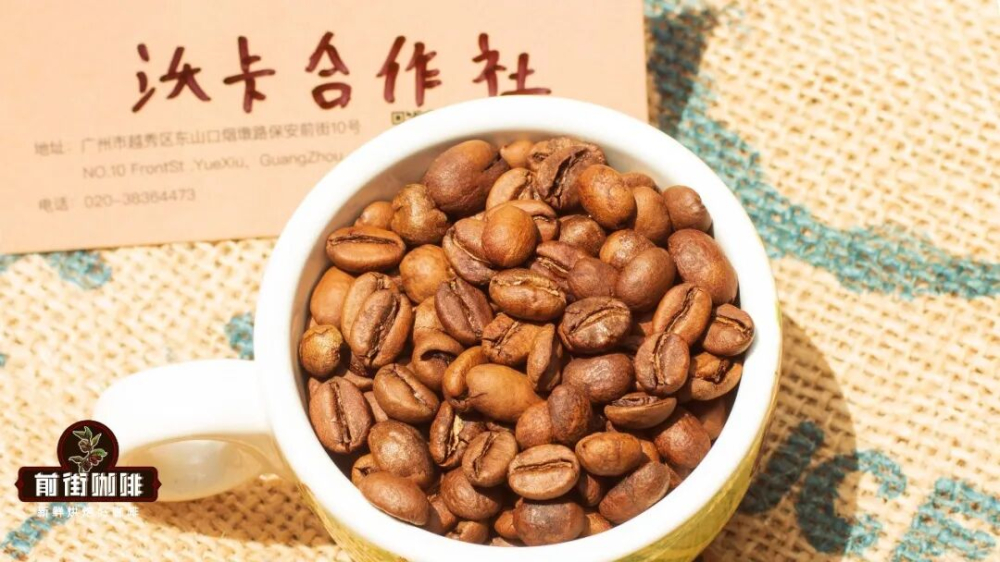
On the basis of traditional processing methods, some anaerobically processed Yirgacheffes have also appeared on the market in the past two years. Qianjie Worka belongs to the novel 72-hour anaerobic natural process. The additional fermentation process brings the coffee more ripe strawberry sweetness and delicate pink floral notes, making the fruit profile richer.

Light Roast Pour-Over Floral Coffee Beans Recommendation: Qianjie Yirgacheffe Gedeo Dingding, Qianjie Panama Hacienda La Esmeralda Green Label Geisha Coffee Beans, QianjiePanama Butterfly Coffee Beans
Daily medium-light roast Yirgacheffe pour-over floral coffee bean recommendation, Qianjie Yirgacheffe Guddina, light roast brings the signature white floral notesAromatic, with lemon-citrus fruit notes and a refreshing floral tea note; bright and crisp on the palate. Great value and an ideal entry-level pour-over coffee with floral and fruity notesAn unrivalled choice.
Moka pot, home espresso, and espresso-based milk drinks like latte — recommended beans: Qianjie Classic Espresso Blend, using BrazilianWest, with Mandheling Arabica and a small amount of Vietnamese Robusta fully blended, delivering a rich and outstanding espressocrema; overall style is rich and memorable. Qianjie Brazil Queen's Estate coffee beans and Qianjie Classic Espresso Blend coffee beans are both mochaA highly recommended option for pot-style espresso machines.
Fruity-floral signature espresso latte bean recommendation: Qianjie Strawberry Candy espresso blend, featuring strawberry gummy and rose aromas,Full-bodied sweetness with a grape and almond finish; especially stunning as an iced latte. Made from Costa Rican honey-process beans, PanamaBlended from Panama Geisha coffee beans and select beans from Colombia's Huila region. Not only does it overturn traditional espresso flavor, the cremaalso performs well, with impressive showings in creative specialty drinks.
Now available on Taobao store「 Qianjie Coffee 」To purchase the above coffee beans, Qianjie Coffee offers dozens of selected single-origin pour-over and espresso coffee beans from around the world. Qianjie CoffeeQianjie Coffee is a veteran specialty coffee roaster; beans are freshly roasted within 5 days, with consistent quality and highly competitive pricesGreat value, ships within 24 hours. Qianjie Coffee is recommended by many coffee lovers and platforms.
Taobao Qianjie Coffee Link: https://qianjiecoffee.taobao.com
Or search our shop directly on Taobao 「Qianjie Coffee」
Qianjie Coffee Store Address: 315 Donghuadong Road, Yuexiu District, Guangzhou

Site Recommendations: 耶加雪菲 花魁咖啡 瑰夏咖啡 波旁咖啡 蓝山咖啡 天堂鸟咖啡豆 曼特宁咖啡豆 PWN黄金曼特宁 星巴克菜单 咖啡豆种类
Please indicate the source when reprinting.
2026-11-16 17:08:01
