When Japanese-style dark roasting keeps the green beans at high temperatures for longer, the moisture inside the beans almost completely evaporates, citric acid and malic acid gradually undergo thermal decomposition, caramelization and Maillard reactions intensify, and ultimately the acidity nearly disappears, bitterness takes the dominant role, and a distinct charred aroma emerges. This forms a sharp contrast with the Nordic ultra-light roast that pursues fruit acidity—the latter usually stops around first crack to preserve light aromatic compounds. Both styles have their adherents and each corresponds to different drinking habits and aesthetic orientations.

Last week, Qianjie briefly introduced the Nordic "ultra-light roast coffee," and I believe everyone already has a basic understanding of this roasting style. Today, we will continue to fill in the gaps and talk about another roast level that can roast coffee beans until they are black and glossy—Japanese-style dark roast.
What is Japanese-style dark roast? Why is it called Japanese-style dark roast?
Whenever we talk about coffee roast levels, we mention its taste and aroma. If Nordic light roast is compared to the "fresh and light" style in coffee, then Japanese-style dark roast, which also exists as an independent term, can be understood as one of the typical representatives of the "heavy flavor" style.

Nowadays, specialty coffee is almost all rushing toward the world of "light roast fruit acidity." More than half of Qianjie's single-origin bean list belongs to light-to-medium roasting, such as Qianjie Panama Geisha with obvious jasmine aroma, Qianjie Ethiopian beans known for citrus acidity, and Qianjie Kenya Little Tomato with berry flavors... In order to perfectly highlight their signature characteristics, roasters need to prevent those light aromatic compounds from being lost at high temperatures, so the coffee beans generally do not reach second crack.
Dark-roasted coffee is exactly the opposite. It deliberately keeps the green beans at high temperatures for a longer time, allowing citric acid and malic acid within the cell walls to begin thermal decomposition and forming more intense caramelization and Maillard reactions. As roasting reaches the second crack stage and continues until the end, the moisture inside the beans almost completely evaporates. Coffee from any origin under such roasting will inevitably tend toward one flavor: acidity nearly disappears, bitterness dominates, the mouthfeel is extremely intense, and even more "burnt" notes are generated.

(Light roast and dark roast)
When explaining roast level grades, Qianjie finally discusses French Roast and Italian Roast. French Roast refers to coffee beans being released only after the end of second crack, with a surface close to dark brown, oily and glossy, giving off a charred aroma, with relatively obvious bitterness. Among traditional European coffee flavors, it is most popular in France; Italian Roast keeps the coffee beans roasting after the end of second crack, and when released they are almost carbonized to black, giving off a strong burnt smell, with powerful bitterness and prominent smoky notes.

However, within the dark roast range of French and Italian styles, the Japanese roasting community was the first to break away from traditional European methods, using a "low heat, slow roast" approach to extend the coffee's heating time, roasting the beans dark and thoroughly, in pursuit of the ultimate experience of "dark but not burnt, intense but not muddy, sweetness and bitterness coexisting."

Japanese-style dark roast is like our Cantonese slow-cooked soup: using direct fire and a slow rhythm to let the coffee beans heat up steadily, and by extending the development period, gradually pushing the green beans toward a French dark roast level. While amplifying caramelization, it also reduces acidity, allowing the bitterness, sweetness, and body produced by roasting to become the coffee's dominant flavors. Finally, the coffee beans will be dark brown throughout, even with an obvious "oil sheen." This roasting method appears mostly in Japanese independent coffee shops or kissaten, and is often paired with siphon, nel drip, or flannel cloth and other highly ritualistic equipment for brewing.

Why do Japanese people prefer dark-roasted coffee?
Japan's earliest contact with coffee can be traced back to the Edo period in the 17th century, when the Dutch brought it to Dejima in Nagasaki, allowing this dark beverage to be tasted by the aristocratic class. During the Meiji Restoration, Zheng Chenggong's grandnephew (Zheng Yongqing) opened Japan's first coffee shop in Tokyo, "Kahi Chakan," where "kahi" was the direct transliteration of "coffee" at the time. He not only brought coffee to the public but also laid the foundation for coffee shops later becoming popular in Japan.

Many people think dark-roasted coffee means "bad," but that is not the case. Although historically there were indeed many practices of masking bean defects, in the era before the concept of specialty coffee was born, all coffee beans were dark roasted, and Japan was no exception. At that time, coffee tasted bitter and intense, and what people drank was that "coffee flavor" accompanied by charred aroma. This had nothing to do with bean quality and was mainly influenced by the market and people's drinking habits.

Japanese-style dark roast was roughly formed only at the end of the 19th century. Influenced by European and American coffee culture at the time, Japan gradually developed a coffee trend centered on kissaten. They appeared in streets and alleys and specifically served strong, bitter dark-roast black coffee. This was very harmonious with the Japanese traditional "heavy flavor" dietary habits and also happened to balance the taste of Japanese sweets, so it was quite popular among consumers.
Later, in order to allow dark-roasted coffee beans to present a softer, sweeter, and smoother mouthfeel on the basis of caramel aroma, and also to ensure stability, early practitioners explored and developed a set of roasting techniques based on experience: using low heat and slow roasting to bring the coffee beans to a relatively dark roast level while avoiding overly heavy smoky and burnt notes, resulting in better body and cleanliness.

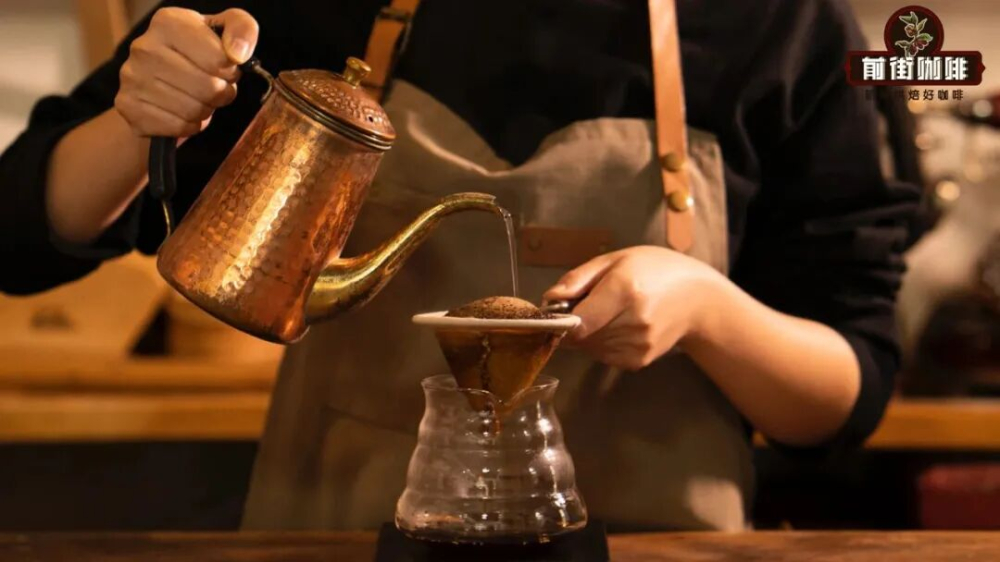
To maximize the charm of Japanese-style dark roast, brewing methods such as siphon, nel drip, and KONO dripper also appeared during the same period. They generally combine low-temperature, gentle extraction techniques. The black coffee brewed is mostly characterized by "intense, full-bodied, and sweet aftertaste." It is not stimulating or harsh, and sometimes carries notes of dark chocolate and charcoal roasting. For example, Qianjie Indonesia Mandheling in Japan is often the first choice for this roasting method. The wet-hulled process brings unique herbal, woody, and spicy characteristics to the coffee, which after Japanese-style dark roasting are transformed into the sweet aroma of herbs and cocoa, as well as a brown-sugar-like sweetness.
Over time, this distinctive "low heat, slow roast" style gradually became an important part of the local coffee culture and continued to develop and be passed down with the progression of coffee waves. For example, the "jikabaisen" emphasized by some old Japanese roasteries refers to the traditional local dark-roasting craft.

Light Roast Pour-Over Floral Coffee Beans Recommendation: Qianjie Yirgacheffe Gedeo Dingding, Qianjie Panama Hacienda La Esmeralda Green Label Geisha Coffee Beans, QianjiePanama Butterfly Coffee Beans
Daily medium-light roast Yirgacheffe pour-over floral coffee bean recommendation, Qianjie Yirgacheffe Guddina, light roast brings the signature white floral notesAromatic, with lemon-citrus fruit notes and a refreshing floral tea note; bright and crisp on the palate. Great value and an ideal entry-level pour-over coffee with floral and fruity notesAn unrivalled choice.
Moka pot, home espresso, and espresso-based milk drinks like latte — recommended beans: Qianjie Classic Espresso Blend, using BrazilianWest, with Mandheling Arabica and a small amount of Vietnamese Robusta fully blended, delivering a rich and outstanding espressocrema; overall style is rich and memorable. Qianjie Brazil Queen's Estate coffee beans and Qianjie Classic Espresso Blend coffee beans are both mochaA highly recommended option for pot-style espresso machines.
Fruity-floral signature espresso latte bean recommendation: Qianjie Strawberry Candy espresso blend, featuring strawberry gummy and rose aromas,Full-bodied sweetness with a grape and almond finish; especially stunning as an iced latte. Made from Costa Rican honey-process beans, PanamaBlended from Panama Geisha coffee beans and select beans from Colombia's Huila region. Not only does it overturn traditional espresso flavor, the cremaalso performs well, with impressive showings in creative specialty drinks.
Now available on Taobao store「 Qianjie Coffee 」To purchase the above coffee beans, Qianjie Coffee offers dozens of selected single-origin pour-over and espresso coffee beans from around the world. Qianjie CoffeeQianjie Coffee is a veteran specialty coffee roaster; beans are freshly roasted within 5 days, with consistent quality and highly competitive pricesGreat value, ships within 24 hours. Qianjie Coffee is recommended by many coffee lovers and platforms.
Taobao Qianjie Coffee Link: https://qianjiecoffee.taobao.com
Or search our shop directly on Taobao 「Qianjie Coffee」
Qianjie Coffee Store Address: 315 Donghuadong Road, Yuexiu District, Guangzhou

Site Recommendations: 耶加雪菲 花魁咖啡 瑰夏咖啡 波旁咖啡 蓝山咖啡 天堂鸟咖啡豆 曼特宁咖啡豆 PWN黄金曼特宁 星巴克菜单 咖啡豆种类
Please indicate the source when reprinting.
2026-08-29 14:06:07
