A friend brought up the feasibility of re-brewing coffee while buying beans at the store, sparked by bloggers online claiming that coffee grounds already brewed once still yield decent flavor when brewed again. Coffee grounds can indeed be brewed a second time or even more, but the total soluble matter is limited—only about 30% of the coffee bean's weight—and it gradually decreases as brewing progresses, leaving mostly just a cup of slightly flavored water. Pour-over, drip bags, espresso, and moka pots differ in extraction methods, so the reusability of the residue varies too; the article compares these situations one by one.

Yesterday, a friend was buying beans at the Qianjie store and got into a discussion with Qianjie about the feasibility of re-brewing coffee. The reason was that he had recently seen videos from some bloggers online, whose content was about how coffee grounds brewed once still taste good after a second brew. So he asked Qianjie: can coffee really be brewed twice?
Logically speaking, coffee grounds can indeed be brewed a second time after the first brew. Not only that, as long as you want, you can brew a third time, a fourth time... as many times as you like. But we need to understand that how many times coffee can be brewed is a completely different matter from whether the resulting coffee tastes good.

The reason we discard coffee grounds after just one brew is that, in many cases, the substances remaining in the grounds are no longer enough to support brewing another delicious cup. The soluble matter in coffee is limited—only 30% of the coffee bean's weight—and these substances gradually decrease as brewing progresses. Once these substances are fully dissolved, brewing the grounds again will only give us a cup of water with a tiny hint of flavor.

But generally speaking, when we brew, we don't dissolve all 30% of the soluble matter—we only extract about two-thirds of the total. Why?
Because the soluble matter isn't only made up of the positive substances that bring us pleasant experiences; there are also negative substances like bitterness, off-flavors, and astringency that detract from the experience. The inclusion of these substances makes a cup of coffee less enjoyable, so under normal circumstances, the extraction yield of coffee is kept at around 20%, leaving about 10% of the soluble matter in the grounds.

As Qianjie said, this remaining 10% of soluble matter contains quite a few less appealing substances, and pleasant aromatic compounds like floral and fruity notes will be much less abundant. So even if we do a second brew, the resulting coffee won't be as rich as the first cup, and because the concentration is lower, the mouthfeel will still be very thin. Unless someone prefers a lighter taste, Qianjie thinks not many people would enjoy such a cup of coffee.
For this experiment, Qianjie brewed Qianjie Sidra, a champion variety from Finca División in Colombia. Because it undergoes double anaerobic natural processing, it naturally carries delicate sweet aromas of passion fruit, grape, and apricot, and performs fresh and pleasant in pour-over with rich layers.

The second brew was done following the method in the video the friend shared: using the same parameters as the first brew for the second brew. The brewing process is skipped.

The first cup of Sidra had a remarkably rich experience whether smelled or tasted—sweet and tart, with prominent flavors of grape, passion fruit, apricot, and floral notes, a full and smooth mouthfeel, a concentration of 1.49%, and an extraction yield of 20.61%. The second brew of Sidra, however, smelled only of a very faint fruity aroma, and upon tasting, almost no flavor could be perceived—just a faint woody note and an extremely weak fruity note, with a concentration of 0.31% and an extraction yield of 4.24%.

Some might say at this point: if we reduce the extraction efficiency during the first brew so that not too much soluble matter is dissolved in the first brew, wouldn't that make a delicious second cup possible?
That's true in theory, but it's very difficult in practice. The reason coffee extraction should be completed in one go is mainly that coffee contains different water-soluble tastes—sour, sweet, bitter, etc.—and we need these flavors to exist simultaneously in appropriate amounts in a cup of coffee, balancing each other, so as to obtain a cup that meets the public taste or what most people consider delicious coffee.
These flavors dissolve at different rates—some fast, some slow. Sour substances dissolve fastest, while bitter substances dissolve slowest. Here Qianjie needs to remind everyone that dissolution rate is not the same as the order of dissolution; coffee's sour, sweet, and bitter substances all begin dissolving simultaneously upon contact with water—they just dissolve at different speeds.
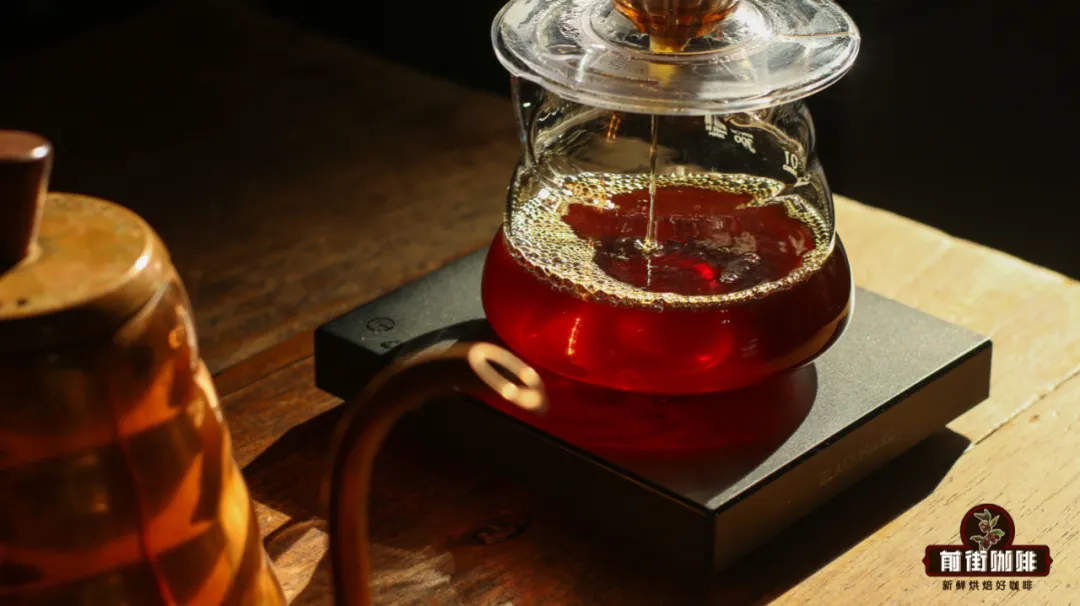
Because sour substances dissolve faster, when we brew coffee, the sour substances dissolve first, followed by sweetness, and finally bitterness. If we reduce extraction efficiency, the proportion of sour substances in the brewed coffee will be relatively high, while the proportions of sweet and bitter substances will be relatively low.
Flavors exist in mutual balance. If there isn't enough sweetness and bitterness to balance the sourness, the coffee's sourness will be more prominent and may even overpower other flavors, becoming a coffee that is only sour. For many people, a coffee that is only sour isn't considered good, and without sufficient sweetness, the coffee also tastes very flat. The second brewed cup will likewise lack layering due to the absence of sourness.
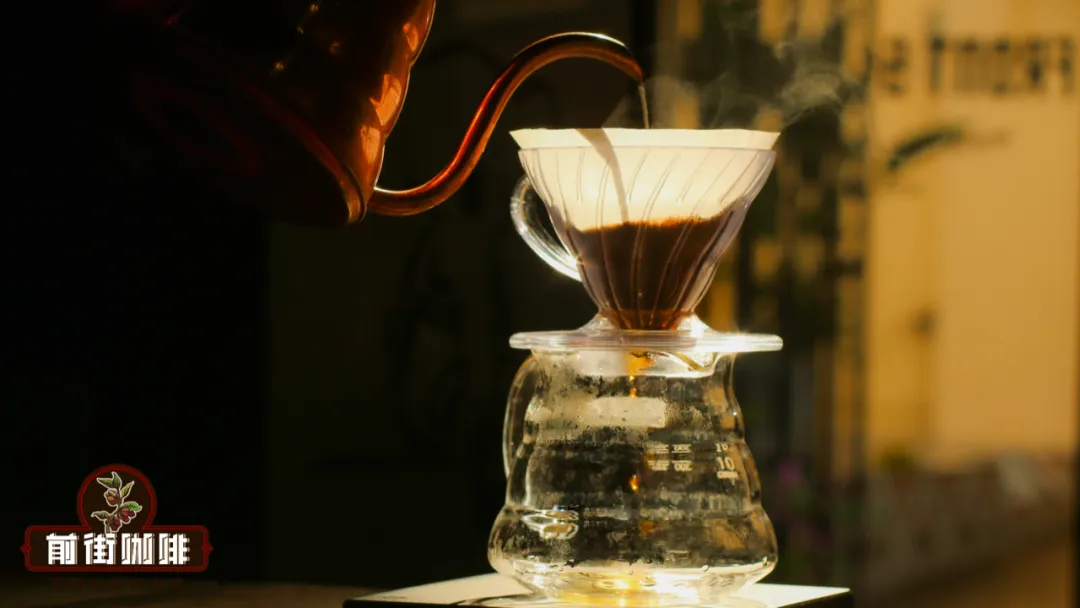
Coincidentally, while Qianjie was researching the brewing parameters for today's headline article on the one-pour tornado technique, one set of parameters produced coffee with somewhat insufficient extraction yield. The beans used were Sidra, and the coffee tasted only sour and very monotonous. So Qianjie brewed this pot of coffee once more.
The result was just as Qianjie expected—the second brew of Sidra had no layering at all. If the full score is 100, then for the general public's taste, these two cups could only be given 50 points—not undrinkable, but not exactly good either. Qianjie believes most people would choose one 80-point coffee over two 50-point coffees.

Therefore, in most cases, coffee is brewed only once, concentrating all the essence of the coffee grounds into a single cup in one go. But then again, taste varies from person to person—some people prefer coffee that isn't so intensely flavored, so they choose to brew coffee in small amounts multiple times, like steeping tea. That's also why Qianjie always emphasizes the general public's taste when sharing tasting experiences. In short, no matter how you do it, as long as you enjoy it, that's what matters~

Light Roast Pour-Over Floral Coffee Beans Recommendation: Qianjie Yirgacheffe Gedeo Dingding, Qianjie Panama Hacienda La Esmeralda Green Label Geisha Coffee Beans, QianjiePanama Butterfly Coffee Beans
Daily medium-light roast Yirgacheffe pour-over floral coffee bean recommendation, Qianjie Yirgacheffe Guddina, light roast brings the signature white floral notesAromatic, with lemon-citrus fruit notes and a refreshing floral tea note; bright and crisp on the palate. Great value and an ideal entry-level pour-over coffee with floral and fruity notesAn unrivalled choice.
Moka pot, home espresso, and espresso-based milk drinks like latte — recommended beans: Qianjie Classic Espresso Blend, using BrazilianWest, with Mandheling Arabica and a small amount of Vietnamese Robusta fully blended, delivering a rich and outstanding espressocrema; overall style is rich and memorable. Qianjie Brazil Queen's Estate coffee beans and Qianjie Classic Espresso Blend coffee beans are both mochaA highly recommended option for pot-style espresso machines.
Fruity-floral signature espresso latte bean recommendation: Qianjie Strawberry Candy espresso blend, featuring strawberry gummy and rose aromas,Full-bodied sweetness with a grape and almond finish; especially stunning as an iced latte. Made from Costa Rican honey-process beans, PanamaBlended from Panama Geisha coffee beans and select beans from Colombia's Huila region. Not only does it overturn traditional espresso flavor, the cremaalso performs well, with impressive showings in creative specialty drinks.
Now available on Taobao store「 Qianjie Coffee 」To purchase the above coffee beans, Qianjie Coffee offers dozens of selected single-origin pour-over and espresso coffee beans from around the world. Qianjie CoffeeQianjie Coffee is a veteran specialty coffee roaster; beans are freshly roasted within 5 days, with consistent quality and highly competitive pricesGreat value, ships within 24 hours. Qianjie Coffee is recommended by many coffee lovers and platforms.
Taobao Qianjie Coffee Link: https://qianjiecoffee.taobao.com
Or search our shop directly on Taobao 「Qianjie Coffee」
Qianjie Coffee Store Address: 315 Donghuadong Road, Yuexiu District, Guangzhou

Site Recommendations: 耶加雪菲 花魁咖啡 瑰夏咖啡 波旁咖啡 蓝山咖啡 天堂鸟咖啡豆 曼特宁咖啡豆 PWN黄金曼特宁 星巴克菜单 咖啡豆种类
Please indicate the source when reprinting.
2026-08-07 17:09:37
