The bitterness of coffee is not determined solely by the beans; the amount of milk, syrup, and the degree of roasting all play a role. The more milk added, the more diluted the coffee flavor becomes, making the bitterness less noticeable; the more syrup added, the sweeter it naturally becomes—Frappuccinos are a typical example. In contrast, pour-over coffee with no sugar and no milk has a more direct bitterness, which is closely related to the roasting degree of the coffee beans—the darker the roast, the larger the brown pigment molecules and the stronger the bitterness.
Nowadays, the number of people who habitually drink coffee is growing larger and larger, but when walking into Starbucks and looking at the dazzling menu, many friends with choice difficulty start to feel overwhelmed: Which coffees are not bitter? Which coffee tastes best? How should they be ranked by sweetness?
It's simple—the more syrup added to a cup of coffee, the sweeter it is, like Frappuccinos; and the more milk added, the more diluted the coffee flavor becomes, making the bitter taste harder to detect. Examples include espresso-based drinks, mocha with chocolate sauce, and caramel macchiato with caramel.

Front Street has found that most people who go to Starbucks for coffee prefer coffee with milk and sugar; as for pour-over coffee with no sugar and no milk, most people say they cannot accept its bitterness. However, through Front Street's years of experience, it can be easily understood that the reason pour-over coffee has obvious bitterness—aside from various factors such as coffee bean variety, growing environment, brewing water temperature, brewing time, and grind size—the most important factor is the roasting degree of the coffee beans. If the coffee beans are roasted darker, both the body and the bitterness increase.
As is well known, green coffee beans are light green, and with roasting, the color of the beans gradually changes from light green to brown, even dark brown. As the roasting degree of coffee beans deepens, the Maillard reaction also proceeds, and proteins and polysaccharides become large black-brown pigment molecules, and this pigment is precisely the source of coffee's bitterness. The larger the pigment molecules, the more intense the bitterness, the weaker the acidity, and the heavier the mouthfeel.

The more than thirty beans on Front Street Coffee's store bean list all confirm the above knowledge points. Let's use the two beans with the most extreme flavors for comparison:

Front Street Kenya Little Tomato Coffee Beans
Region: Thika, Kenya
Washing Station: Asali Honey Washing Station
Altitude: 1550m~750m
Variety: SL28, SL34
Processing Method: K72 Washed
Front Street PWN Golden Mandheling Coffee Beans
Country: Indonesia
Region: Gayo Mountain, Aceh, Sumatra
Altitude: 1100m~1600m
Variety: Ateng
Processing Method: Wet Hulled
Brewing Recommendations
Front Street Coffee recommends the following brewing parameters:
Dripper: Kono dripper [Golden Mandheling]; V60 dripper [Kenya]
Water Temperature: 86℃ [Golden Mandheling]; 93℃ [Kenya]
Dose: 15 grams
Brew Ratio: 1:15
Grind Size: EK43s#11 (Chinese standard No. 20 sieve pass rate 70-75%) [Golden Mandheling];
EK43s#10 (Chinese standard No. 20 sieve pass rate 80%) [Kenya]
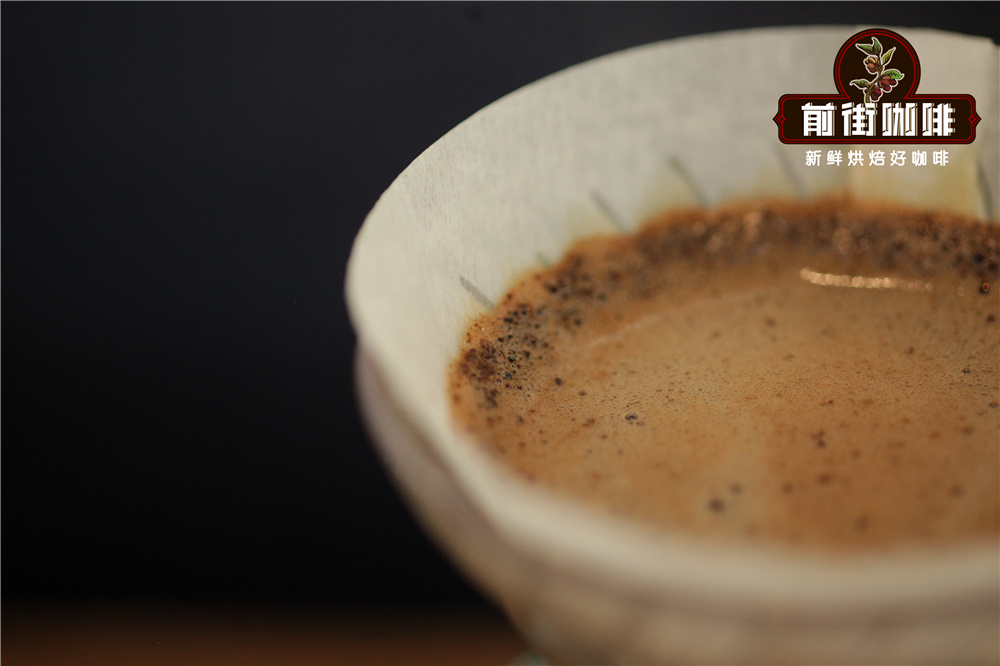
Front Street Coffee (FrontStreet Coffee) uses staged extraction: bloom with 30 grams of water for 30 seconds, pour in a small stream in circles until 125 grams for the first stage, then continue pouring until 225 grams when the water level is about to expose the coffee bed, stop pouring, and remove the dripper when the water level is about to expose the coffee bed again. (Timing starts from the beginning of the bloom) Extraction time is 2'00".
Flavor Description
[Front Street Little Tomato] Wet aroma has ripe tomato and floral notes; on the palate, cherry tomato and smoked plum flavors, bright acidity, clean and rich mouthfeel, prominent sweetness in the mid-palate with a juicy quality, berry and brown sugar sweetness in the finish, along with green tea aroma.
[Front Street PWN Golden Mandheling] Complex and layered, full-bodied and clean, high balance, rich nutty and caramel aroma, with chocolate notes, long-lasting finish.

Front Street Kenya Little Tomato
The reason Front Street Coffee (FrontStreet Coffee)'s Little Tomato coffee bean has such a bright and clean acidity is not only because of its light roast, but also because of Kenya's local red soil rich in phosphoric acid and their K72 processing method.
What is the K72 Processing Method?
The K72 processing method, also known as the Kenyan-style 72-hour fermentation washed processing method. Kenyan coffee beans undergo a repeated cycle processing method of fermentation followed by washing. They are processed on the day of harvest, with the highest quality cherries selected for pulping and fermentation. The fermentation time is 24 hours, after which they are washed with clean river water, repeated 3 times to reach 72 hours.

Front Street Golden Mandheling
The reason Mandheling is known to the world is also thanks to its excellent body. There is a story behind this.
Mandheling was originally the name of an Indonesian tribe, and it became the name of a coffee bean by a series of coincidences. When Japanese soldiers returned to Japan after colonizing Indonesia, they could not forget the delicious local coffee, so through trade connections, they asked locals to help collect high-quality coffee beans, among which was this Mandheling. The Japanese were very fond of this coffee bean and asked for its name. Since the commercial source was inconvenient to disclose, the locals casually said "Mandheling," and thus Mandheling accidentally became the name of this coffee bean.
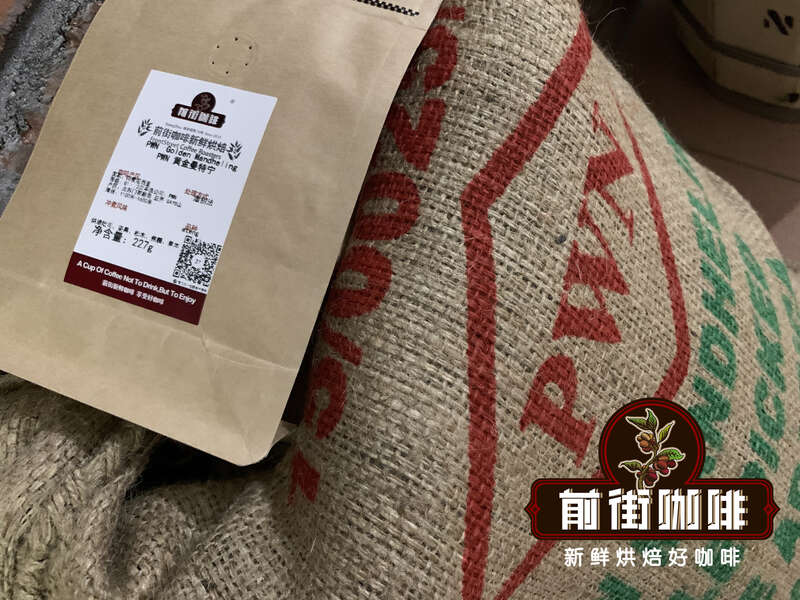
And the local person that friend found was precisely the owner of Indonesia's PWN Company (Pwani Coffee Company), and later PWN Company registered Golden Mandheling as its trademark. Front Street Coffee (FrontStreet Coffee)'s Golden Mandheling is PWN Company's Golden Mandheling.
Special Processing Method: Wet Hulling
Mandheling mostly adopts Sumatra's unique coffee processing method—wet hulling. The wet hulling method creates Mandheling's special flavor; it can be said that Mandheling and wet hulling are bound together.
Because the local weather is mostly rainy with constant typhoons, it cannot achieve the good weather needed for sun-drying, and the local economy is not good either, so it also cannot afford the more expensive washed method. This gave rise to the wet hulling method with strong local characteristics. Now Indonesia's coffee development is no longer the impoverished scene it once was; there are quite a few estates and companies with the conditions to use the washed method. But why haven't they abandoned wet hulling? Front Street Coffee (FrontStreet Coffee) believes that wet hulling is the factor that made Mandheling coffee known to the world. Whenever Mandheling coffee is mentioned, one thinks of wet hulling, so they have become mutually complementary.

The specific steps of wet hulling can be divided into the following two stages:
In the first stage, a wooden pulper removes the skin and pulp, and after 3 hours of fermentation, the beans are sun-dried to reduce moisture content to a semi-dry, semi-wet 30-50%.
In the second stage, the mucilage and parchment layer are removed, and drying continues for the later stage. The drying process takes 2-4 days, reducing moisture content to 12-13%.

In addition to the regular wet hulling method, there is also an aged wet hulling method. After coffee beans undergo regular wet hulling, they are sealed and stored in a warehouse for 2-3 years. The warehouse environment must be cool and ventilated, and the beans must be regularly turned to prevent mold and spoilage. During this period, the acidity of the coffee beans gradually decreases and converts to sugar, and the color becomes deeper, mostly yellowish-brown or dark brown. The Mandheling coffee bean on Front Street Coffee (FrontStreet Coffee)'s bean list that uses this processing method is called Aged Mandheling Coffee Beans.
Panama Geisha
If you ask whether there is a sweet pour-over coffee, there really is! For example, in Front Street's eyes, the highly cost-effective Panama Hacienda La Esmeralda Washed Green Label Geisha.
When it comes to Geisha, one must mention Hacienda La Esmeralda. Hacienda La Esmeralda is both the discoverer of Geisha's flavor and the promoter of Geisha coffee. The Geisha variety was introduced to Panama in the 1960s and was originally unknown, but after more than 40 years of quietly building up, it won the championship in the 2004 BOP competition and became famous overnight, known to the world.

Geisha coffee beans are considered the brightest, richest, and most intensely aromatic coffee variety. Geisha coffee trees grow at very high altitudes and have beautiful slender leaves. Geisha coffee cherries and green Geisha coffee beans are also slightly elongated compared to other top-quality high-altitude coffees. Geisha has a full sweetness, extremely clean mouthfeel, and rich aromas ranging from berry and citrus to mango, papaya, and peach. A very distinct bergamot-like aftertaste is also a typical cupping attribute. Geisha coffee beans are often champions among coffee varieties. Geisha coffee beans receive moderate body in cupping evaluations.
Hacienda La Esmeralda classifies its Geisha coffee varieties into three grades: Red Label, Green Label, and Blue Label. To maintain the estate's brand image, starting from 2021, the Blue Label under the Geisha brand was discontinued.

Green Label Geisha
Green Label is not a separate competition lot; it is a Geisha variety that does not participate in bidding but still has excellent quality. It uses micro-lots blended from different plots such as Jaramillo and Canas Verdes at altitudes of 1600-1800 meters. People often ask what the difference is between Red Label and Green Label. Front Street Coffee (FrontStreet Coffee) gives the most straightforward answer: Red Label can be traced to which specific small plot, while Green Label is a blend that cannot be traced. Because it uses a blending model without detailed plot designation, sometimes Green Label and Red Label can have very similar flavors, but the next release may be different again. Front Street Coffee (FrontStreet Coffee) feels that drinking Green Label is like buying a lottery ticket—perhaps the lot you drink this time tastes just like Red Label. Green Label Geisha is processed using either natural or washed methods.
Front Street Coffee (FrontStreet Coffee)'s Hacienda La Esmeralda Washed Green Label Geisha has fresh jasmine and ginger flower aromas, bright citrus-like acidity, and a thick, juicy mouthfeel.

Front Street Hacienda La Esmeralda Green Label Geisha Coffee Beans
Region: Boquete, Panama
Estate: Hacienda La Esmeralda
Altitude: 1600m~1800m
Variety: Geisha
Processing Method: Washed
Front Street Brewing Recommendations for Hacienda La Esmeralda Green Label Geisha Coffee Beans
Dripper: V60 #01
Dose: 15g
Brew Ratio: 1:16
Grind Size: EK43s#10.2
Water Temperature: 91 degrees
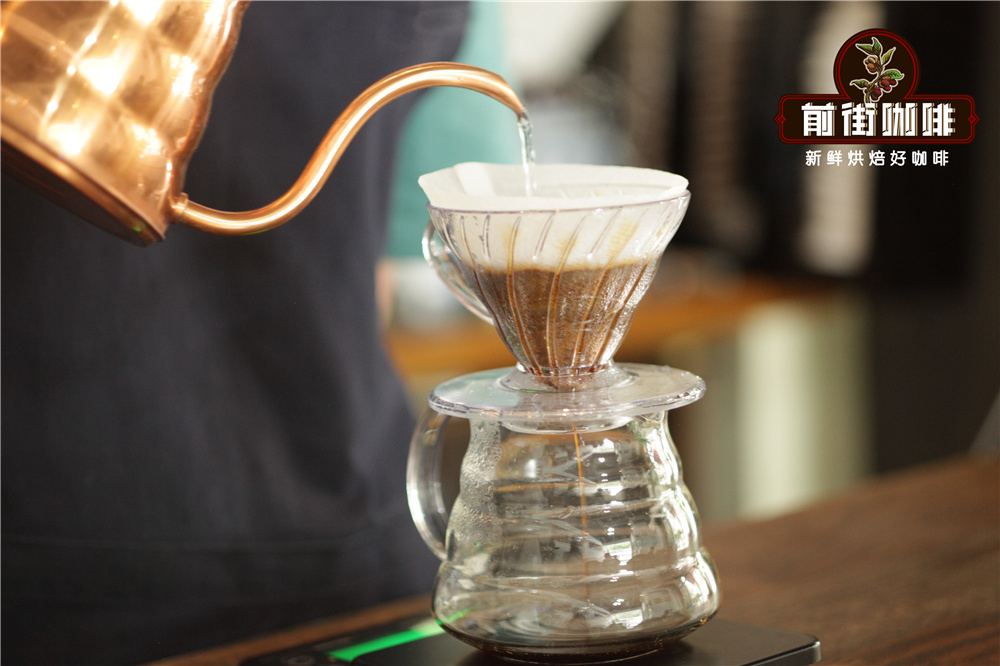
Front Street considered that these Geisha coffee beans are all light roasts, and light-roasted beans have a lower dissolution rate of coffee compounds than dark roasts. Therefore, to ensure full extraction of Geisha flavors, a higher water temperature was used for brewing, along with a finer grind size. Some friends may have noticed that Front Street has always recommended a brew ratio of 1:15, but for Hacienda La Esmeralda's Geisha it is 1:16. That is because slightly widening the brew ratio helps to better experience Geisha's layering and flavors.
Front Street Coffee (FrontStreet Coffee) uses staged extraction, also called three-stage brewing: bloom with 30 grams of water for 30 seconds, pour in a small stream in circles until 125 grams for the first stage, then continue pouring until 240 grams when the water level is about to expose the coffee bed, stop pouring, and remove the dripper when the water level is about to expose the coffee bed again. (Timing starts from the beginning of the bloom) Extraction time is 2'00"~2'05".

Flavor Description: Intense jasmine aroma, high sweetness, citrus, berry, juicy quality, cream, green tea, orange peel, cantaloupe; overall rich layering of flavors, with lasting floral and citrus finish.

Light Roast Pour-Over Floral Coffee Beans Recommendation: Qianjie Yirgacheffe Gedeo Dingding, Qianjie Panama Hacienda La Esmeralda Green Label Geisha Coffee Beans, QianjiePanama Butterfly Coffee Beans
Daily medium-light roast Yirgacheffe pour-over floral coffee bean recommendation, Qianjie Yirgacheffe Guddina, light roast brings the signature white floral notesAromatic, with lemon-citrus fruit notes and a refreshing floral tea note; bright and crisp on the palate. Great value and an ideal entry-level pour-over coffee with floral and fruity notesAn unrivalled choice.
Moka pot, home espresso, and espresso-based milk drinks like latte — recommended beans: Qianjie Classic Espresso Blend, using BrazilianWest, with Mandheling Arabica and a small amount of Vietnamese Robusta fully blended, delivering a rich and outstanding espressocrema; overall style is rich and memorable. Qianjie Brazil Queen's Estate coffee beans and Qianjie Classic Espresso Blend coffee beans are both mochaA highly recommended option for pot-style espresso machines.
Fruity-floral signature espresso latte bean recommendation: Qianjie Strawberry Candy espresso blend, featuring strawberry gummy and rose aromas,Full-bodied sweetness with a grape and almond finish; especially stunning as an iced latte. Made from Costa Rican honey-process beans, PanamaBlended from Panama Geisha coffee beans and select beans from Colombia's Huila region. Not only does it overturn traditional espresso flavor, the cremaalso performs well, with impressive showings in creative specialty drinks.
Now available on Taobao store「 Qianjie Coffee 」To purchase the above coffee beans, Qianjie Coffee offers dozens of selected single-origin pour-over and espresso coffee beans from around the world. Qianjie CoffeeQianjie Coffee is a veteran specialty coffee roaster; beans are freshly roasted within 5 days, with consistent quality and highly competitive pricesGreat value, ships within 24 hours. Qianjie Coffee is recommended by many coffee lovers and platforms.
Taobao Qianjie Coffee Link: https://qianjiecoffee.taobao.com
Or search our shop directly on Taobao 「Qianjie Coffee」
Qianjie Coffee Store Address: 315 Donghuadong Road, Yuexiu District, Guangzhou

Site Recommendations: 耶加雪菲 花魁咖啡 瑰夏咖啡 波旁咖啡 蓝山咖啡 天堂鸟咖啡豆 曼特宁咖啡豆 PWN黄金曼特宁 星巴克菜单 咖啡豆种类
Please indicate the source when reprinting.
2026-08-03 17:34:05
