Many older customers walk into the store and wonder: why is most coffee nowadays sour? Where did the deep, roasty, aromatic flavor of the past go? This shift is closely tied to the rise of specialty coffee and the popularity of light-roast styles; the sourness often comes from the fruit acidity brought by origin and processing method. But sour does not equal good—Jamaica Blue Mountain No. 1 is known for its bitter profile built on chocolate, caramel, and nuts. Quality level and flavor direction are two different matters entirely.

Quite a few friends have noticed that on Qianjie's coffee bean list, coffees that are mainly bitter and carry the so-called "coffee flavor" make up less than 10%, while the remaining 90% are sour coffees. This makes many friends curious: why is most coffee nowadays sour? Is it true what people online say—that good coffee is all sour?
The people raising these questions are mainly somewhat older customers and friends, whose impression of coffee is that it is deeply roasty, bitter, and aromatic. Because before 2000, coffee almost always tasted mainly bitter, they cannot help but sigh and question such a shift.

First, we need to know that good coffee is not necessarily sour. Qianjie believes that the statement "good coffee is all sour" carries a certain ambiguity. Our understanding of good coffee is usually "higher quality." Although it is undeniable that most higher-quality coffees on the market are sour, there are also some high-quality coffees whose flavor is mainly bitter. For example, Qianjie Jamaica Blue Mountain No. 1 on Qianjie's bean list.

Qianjie Jamaica Blue Mountain coffee was a very famous representative of high-quality coffee in the last century, and its flavor is mainly bitter. Chocolate, caramel, cream, and nuts are the very classic "coffee flavor" it presents.
The quality of coffee is not the factor that determines flavor; it is only one of the points of emphasis that decides the direction of coffee's flavor. Friends who often read Qianjie's posts should know that whether coffee is sour or bitter mainly depends on the roast level of the coffee beans. The lighter the coffee beans are roasted, the more sour the coffee; the darker the coffee beans are roasted, the more bitter the coffee. The reason much of today's coffee is sour is that coffee roasting is no longer all dark roast.

In the past, coffee was basically all dark roasted, so the flavor was mainly bitter. The reason dark roast was the mainstream back then is that at the time there was no so-called distinction between dark and light roast. People's initial understanding of coffee roasting was like stir-frying vegetables—roast the coffee beans until they are cooked.
The standard for roasting coffee done at that time was that the beans had to go through second crack, what we often call second crack. Beans that have gone through second crack without exception have a rich roasty aroma and a dark black appearance. And this was what people at the time thought coffee should look like.

Of course, Qianjie also believes that people back then tried roasting coffee lighter, whether subjectively or by accident. But after all, light roast was not the mainstream at the time. It is like how, after getting used to a certain flavor of douhua, people may consider another flavor of douhua inferior; people could not accept coffee with sourness.
Add to that: the quality of coffee beans at the time was not high, roasting theory was not so mature, roasting methods were not so particular, and other reasons. In short, in the past, coffee that came out sour was regarded as a failure, as inferior, as coffee that had not been roasted done. So until just over a decade ago, mainstream coffee roasting was dark roast, and beans such as Qianjie PWN Golden Mandheling, Qianjie Brazil Cerrado, and Qianjie Huilan were products of that era.

A major opportunity that led to a shift in everyone's thinking was the release of the concept of "specialty coffee." Ms. Erna Knutsen believed that some high-quality coffee beans should be singled out to shine on their own and should not be buried among commodities. But unexpectedly, this practice indirectly led to a shift in roasting concepts, because coffee quality improved, so people found a "breakthrough point" in it and developed entirely new ways of playing.

What pushed the gears of history forward were the new forces whose ideas had not yet been too influenced! Qianjie believes everyone has more or less heard of "Nordic light roast," right? At the time, coffee roast levels were often named after the mainstream roast level of a region, such as Italian roast, French roast, Japanese roast... And Nordic light roast means that the mainstream roast in the Nordic region is light roast.
Compared with places such as Italy and France, where ideas were already deeply rooted, the Nordic region came into contact with coffee later, so it was relatively younger and its ideas were not too influenced. Precisely because of this, it could break tradition and become the first place where light-roast coffee became popular.

If the Nordic light roast of that time were judged by color value, it would mostly fall at the medium-roast level and had not yet reached the degree of light roast we know today. But compared with Italian roast back then, it was a very, very light roast level.
And lighter roasting does not just make coffee more sour; it also reduces the roasty aroma that masks coffee's flavors, allowing the floral and fruity notes contained in the coffee to emerge. People began to be able to taste more flavors in coffee—no longer monotonous bitterness, but a colorful array of sourness.

Such a flavor is very suited to the public's taste, because people, well, always dislike bitterness. So in some regions/countries that have not been overly baptized by bitter coffee culture, those sour coffees that do not taste like coffee are instead more easily accepted. Therefore in these regions/countries, coffee is roasted relatively lighter. Whether espresso or single-origin! Both because light-roasted coffee is more easily accepted and because it better showcases the differences between coffees.

But then again, not all coffee beans can be light roasted. Because some lower-quality coffee beans are not sweet enough or carry less pleasant defective flavors. If we lightly roast this kind of lower-quality coffee bean, the former will produce a stimulating, sharp sourness because it is not sweet enough, while the latter will give the coffee unacceptable off-flavors.
Beans like these are more suitable for dark roasting, generating more roasty aroma through dark roasting to mask the coffee's defective flavors. In other words, light roasting is also a touchstone; only beans that meet the conditions and are relatively excellent in quality can be cooked with light roasting.

But again, this does not mean the statement "good coffee is all sour" is correct. Because what flavor coffee ultimately has and what roast level is used mainly depend on the specific need! For example, Qianjie Sun-Dried Huakui sold in Qianjie's Taobao Tmall store has two selectable roast levels. One is the light roast used for pour-over and single-origin coffee, and the other is the medium roast suitable for espresso preparation.

The former better highlights the flavor characteristics of Qianjie Huakui; when we use it for pour-over preparation, we can taste the aromas of orange blossom, citrus, strawberry, and cream, with a flavor mainly of sourness and sweetness. And if you want to use this bean for espresso preparation, Qianjie recommends choosing the latter—medium roast.
Because espresso is not only black coffee; there are also lattes, flat whites, Dirty, and other milk-based fancy coffees. Only by roasting the coffee darker will the coffee's flavor not be easily masked by milk, so we can taste more coffee flavor from milk coffee.
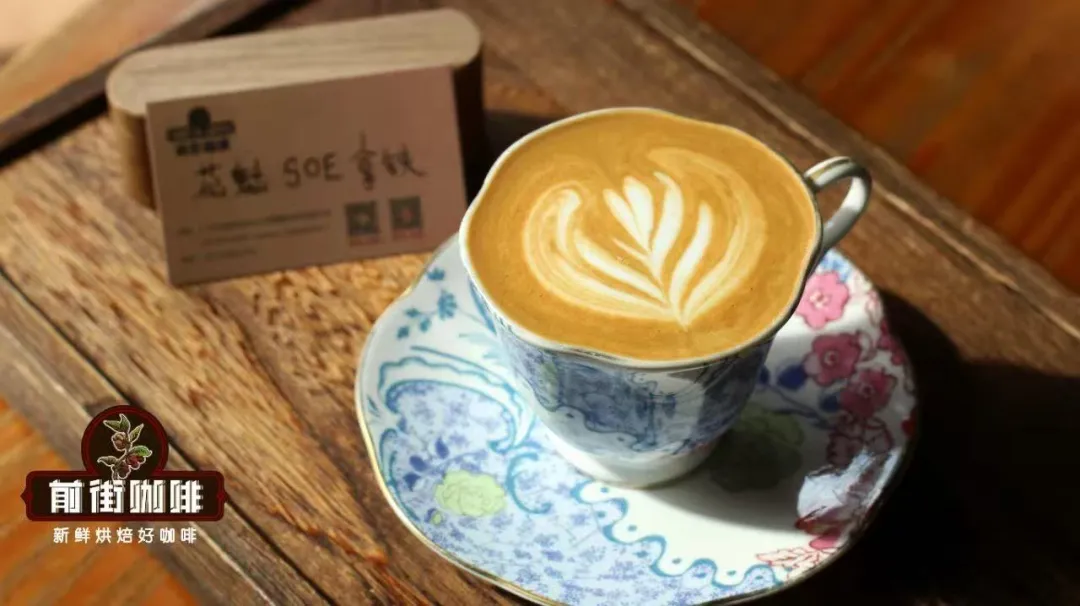
In summary, we can know that the reason much of today's coffee is sour is both that these non-bitter coffees are more suited to the public's taste and that they can better show the differences between different coffee beans and better interpret the regional flavor of each producing area. And coffee's flavor is not entirely affected by quality; it mainly depends on the roaster's needs~

Light Roast Pour-Over Floral Coffee Beans Recommendation: Qianjie Yirgacheffe Gedeo Dingding, Qianjie Panama Hacienda La Esmeralda Green Label Geisha Coffee Beans, QianjiePanama Butterfly Coffee Beans
Daily medium-light roast Yirgacheffe pour-over floral coffee bean recommendation, Qianjie Yirgacheffe Guddina, light roast brings the signature white floral notesAromatic, with lemon-citrus fruit notes and a refreshing floral tea note; bright and crisp on the palate. Great value and an ideal entry-level pour-over coffee with floral and fruity notesAn unrivalled choice.
Moka pot, home espresso, and espresso-based milk drinks like latte — recommended beans: Qianjie Classic Espresso Blend, using BrazilianWest, with Mandheling Arabica and a small amount of Vietnamese Robusta fully blended, delivering a rich and outstanding espressocrema; overall style is rich and memorable. Qianjie Brazil Queen's Estate coffee beans and Qianjie Classic Espresso Blend coffee beans are both mochaA highly recommended option for pot-style espresso machines.
Fruity-floral signature espresso latte bean recommendation: Qianjie Strawberry Candy espresso blend, featuring strawberry gummy and rose aromas,Full-bodied sweetness with a grape and almond finish; especially stunning as an iced latte. Made from Costa Rican honey-process beans, PanamaBlended from Panama Geisha coffee beans and select beans from Colombia's Huila region. Not only does it overturn traditional espresso flavor, the cremaalso performs well, with impressive showings in creative specialty drinks.
Now available on Taobao store「 Qianjie Coffee 」To purchase the above coffee beans, Qianjie Coffee offers dozens of selected single-origin pour-over and espresso coffee beans from around the world. Qianjie CoffeeQianjie Coffee is a veteran specialty coffee roaster; beans are freshly roasted within 5 days, with consistent quality and highly competitive pricesGreat value, ships within 24 hours. Qianjie Coffee is recommended by many coffee lovers and platforms.
Taobao Qianjie Coffee Link: https://qianjiecoffee.taobao.com
Or search our shop directly on Taobao 「Qianjie Coffee」
Qianjie Coffee Store Address: 315 Donghuadong Road, Yuexiu District, Guangzhou

Site Recommendations: 耶加雪菲 花魁咖啡 瑰夏咖啡 波旁咖啡 蓝山咖啡 天堂鸟咖啡豆 曼特宁咖啡豆 PWN黄金曼特宁 星巴克菜单 咖啡豆种类
Please indicate the source when reprinting.
2026-08-03 16:19:18
