The moka pot, like espresso machines, uses pressurized extraction. Its advantage is high efficiency, but a slight lapse can easily lead to over-extraction, making the coffee taste burnt and bitter with obvious off-flavors that are hard to mask even with sugar and milk. Channeling is one of the common causes: hot water concentrates and passes through the coffee bed at one spot, over-extracting that area while under-extracting the rest, resulting in a taste that is both bitter and sour.

Qianjie has found that many friends are troubled by the problem of moka pot coffee frequently being over-extracted. Because every time Qianjie shares a tweet related to the moka pot, friends leave comments like: "How can I avoid over-extracting moka pot coffee," or "What's going on when the brewed coffee is too bitter?"
The moka pot, like espresso machines, uses pressurized extraction. The advantage of pressurized extraction is that the extraction efficiency is very high, and coffee can be extracted in a very short time, but relatively speaking, because the efficiency is too high, the coffee is also more prone to over-extraction. Over-extracted coffee tastes noticeably burnt and bitter or has many off-flavors, and even with sugar and milk added, the coffee still tastes unpleasant.

1. Channeling
For pressurized extraction, one of the reasons over-extraction frequently occurs in coffee is "channeling." What is channeling? It means hot water concentrates and extracts in one spot, causing the coffee grounds there to be over-extracted while the coffee grounds elsewhere are under-extracted, so the coffee tastes both bitter and sour, with very poor balance.

The reason channeling occurs is that water is lazy and will preferentially flow to places where it can flow more easily. And in order to dissolve a large amount of flavor substances from the coffee grounds in a short time, pressurized extraction generally uses a very fine grind, so that the puck has enough resistance for pressure to build up.
But if there is less coffee grounds in one spot and the density there is not as high as elsewhere, then the hot water will concentrate and pass through that spot, thereby causing channeling. So if we want to improve the over-extraction problem of moka pot coffee, we first need to prevent channeling. So what factors can cause channeling?
① Uneven distribution of grounds: Just like with espresso, uneven distribution of grounds will cause channeling. If the coffee grounds falling into the basket are unevenly distributed and tamped without adjustment, the density of the puck will vary, and channeling will follow.

This situation is easy to solve! After we put the grounds into the basket, we can pay some attention to see whether the amount of coffee grounds is roughly the same everywhere. If so, we can tamp and extract.
If not, we need to use a finger to stir the coffee grounds so that their distribution becomes even. Then gently tap the basket to make the coffee grounds connect more tightly, and finally tamp and extract.

By adjusting the coffee grounds this way, we can make the density of the puck more uniform, making channeling harder to occur.
②③ Too low heat, using cold water: The initial water temperature and the heat level both affect the extraction of moka pot coffee. What they mainly affect is the length of time from when the moka pot starts heating to when the coffee comes out. The longer the heating time, the more likely channeling is to occur during extraction.

As is well known, the reason the moka pot needs heating is to generate enough steam to build pressure, thereby pushing hot water to extract the coffee grounds. During heating, steam is already being produced continuously, and the steam from the water in the reservoir drifts upward, moistening the coffee grounds at the bottom of the puck.
The density of the areas pre-moistened by steam will be reduced, and during extraction, this part will be easier for water to pass through than other parts of the coffee grounds. The longer the heating time, the more the puck is moistened, the lower its density, and the easier it is for water to pass through.

The moka pot belongs to pressurized extraction and best highlights the body and richness of coffee. If light-roasted coffee beans are used for brewing, light-roasted beans are harder in texture and usually require a finer grind to increase the extraction rate. However, fine grinding under high temperature and pressure not only easily makes the coffee sour and harsh, but also hinders the flow of hot water, making it difficult for the coffee liquid to be released.
If you want the moka pot to be more stable, everyone should give priority to using darker-roasted espresso blend coffee beans as the raw material. You can buy Qianjie.Qianjie Classic Blend, which is rich in crema and has buttery and chocolate aromas, or Qianjie.Brazil Queen's Manor, which has the fresh sweetness of mixed nuts and sugarcane.

If you don't want the coffee to be too strong, it is best to use Qianjie Strawberry Candy espresso or Qianjie Blackberry SOE, so that the moka pot can produce a fresh and highly sweet taste, with low bitterness and slight acidity. At the same time, because they all use honey processing, the coffee has rich berry and floral aromas.

So, when conditions permit, Qianjie would recommend using medium to high heat to brew moka pot coffee before the liquid comes out, and the higher the initial water temperature, the better. This can greatly reduce the occurrence of channeling and give a higher chance of making delicious coffee.

2. Heat too high after the liquid starts coming out
It is worth noting that after the liquid starts coming out, the heat for brewing the moka pot is best turned down to low or even turned off, using residual heat to generate steam and extract the moka pot coffee.

Because if the current heat is still used to extract the coffee after the liquid starts coming out, then excessive steam and excessive pressure will cause the hot water to pass quickly through the puck in a short time, greatly shortening the extraction time. In addition to under-extraction, continued high-heat brewing will also cause channeling, making the coffee both bitter and sour.
3. Grind too fine and too much water
Moka pots come with an instruction manual that details the method of use and the official recommended parameters, for example, for 2 servings pour in xx grams of grounds and 120ml of water to brew, and for 4 servings use xx grams of grounds and 180ml. Many friends follow the parameters in the manual when they first start using it.

There is nothing wrong with that, but if your grind is relatively fine, close to flour-like particles like espresso machine grind, then you need to pay attention to the amount of water used.
Because finely ground coffee releases flavor substances more easily, and a larger amount of water increases the dissolved flavor substances. If the grind we use is flour-like particles and the amount of water used is also large, then it will be very easy to extract a cup of moka pot coffee that is burnt, bitter, and full of off-flavors.
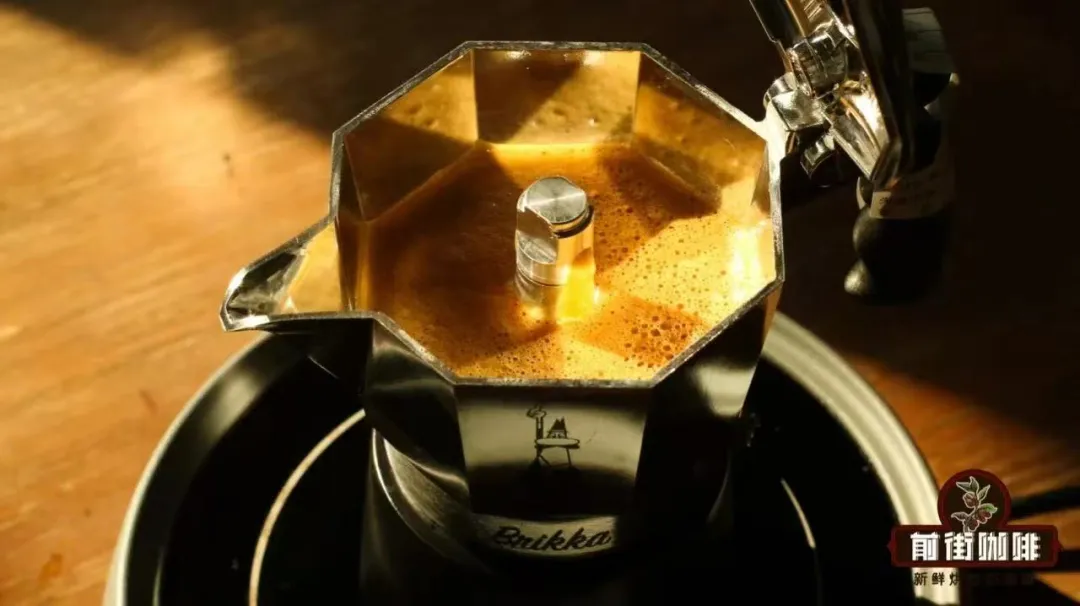
Many friends use pre-ground coffee and cannot freely adjust the grind size, so in this case we need to control the coffee's extraction rate by adjusting the amount of water and the heat level after the liquid starts coming out. But the latter is relatively more difficult to adjust, so Qianjie more recommends adjusting by reducing the amount of water.
So the above are the three main reasons Qianjie could think of that cause moka pot coffee to be over-extracted. If you have other findings, feel free to add them in the comments~

Light Roast Pour-Over Floral Coffee Beans Recommendation: Qianjie Yirgacheffe Gedeo Dingding, Qianjie Panama Hacienda La Esmeralda Green Label Geisha Coffee Beans, QianjiePanama Butterfly Coffee Beans
Daily medium-light roast Yirgacheffe pour-over floral coffee bean recommendation, Qianjie Yirgacheffe Guddina, light roast brings the signature white floral notesAromatic, with lemon-citrus fruit notes and a refreshing floral tea note; bright and crisp on the palate. Great value and an ideal entry-level pour-over coffee with floral and fruity notesAn unrivalled choice.
Moka pot, home espresso, and espresso-based milk drinks like latte — recommended beans: Qianjie Classic Espresso Blend, using BrazilianWest, with Mandheling Arabica and a small amount of Vietnamese Robusta fully blended, delivering a rich and outstanding espressocrema; overall style is rich and memorable. Qianjie Brazil Queen's Estate coffee beans and Qianjie Classic Espresso Blend coffee beans are both mochaA highly recommended option for pot-style espresso machines.
Fruity-floral signature espresso latte bean recommendation: Qianjie Strawberry Candy espresso blend, featuring strawberry gummy and rose aromas,Full-bodied sweetness with a grape and almond finish; especially stunning as an iced latte. Made from Costa Rican honey-process beans, PanamaBlended from Panama Geisha coffee beans and select beans from Colombia's Huila region. Not only does it overturn traditional espresso flavor, the cremaalso performs well, with impressive showings in creative specialty drinks.
Now available on Taobao store「 Qianjie Coffee 」To purchase the above coffee beans, Qianjie Coffee offers dozens of selected single-origin pour-over and espresso coffee beans from around the world. Qianjie CoffeeQianjie Coffee is a veteran specialty coffee roaster; beans are freshly roasted within 5 days, with consistent quality and highly competitive pricesGreat value, ships within 24 hours. Qianjie Coffee is recommended by many coffee lovers and platforms.
Taobao Qianjie Coffee Link: https://qianjiecoffee.taobao.com
Or search our shop directly on Taobao 「Qianjie Coffee」
Qianjie Coffee Store Address: 315 Donghuadong Road, Yuexiu District, Guangzhou

Site Recommendations: 耶加雪菲 花魁咖啡 瑰夏咖啡 波旁咖啡 蓝山咖啡 天堂鸟咖啡豆 曼特宁咖啡豆 PWN黄金曼特宁 星巴克菜单 咖啡豆种类
Please indicate the source when reprinting.
2026-08-07 13:59:40
