When it comes to coffee with prominent sweetness, many people first think of Costa Rica. This country, located in the Central American isthmus, is influenced by both the Pacific and Atlantic ocean currents and monsoons, creating suitable temperatures and a unique microclimate. Coffee-producing regions are mostly concentrated in the central part of the country, which is traversed by the Cordillera mountain range; volcanic soil and elevation differences create conditions for the slow ripening of coffee cherries and the accumulation of sugars.

When it comes to sweeter coffee, many people associate it with Costa Rican coffee, simply because coffee beans produced in Costa Rica are of high quality, with a light and pure flavor, pleasant aroma, and high sweetness. Therefore, many people wonder why Costa Rican coffee has such high sweetness.
Qianjie believes this is thanks to Costa Rica having almost ideal climate and topographical conditions for coffee cultivation, and the government placing great importance on the coffee industry, strictly requiring the production of high-quality coffee. In addition, the Honey Process commonly used in Costa Rica can increase the sweetness of coffee and bring a caramel-like mouthfeel to it. Qianjie Strawberry Candy is a Geisha blend processed using the honey method.

Costa Rica, located in the Central American isthmus, is influenced by both the Pacific and Atlantic ocean currents as well as monsoons, creating suitable temperatures and a unique microclimate in the country. Coffee-producing regions are concentrated in the central part of the country, which is traversed by the Cordillera mountains and brings numerous volcanic mountain ranges and basins to the area. More than 80% of coffee is planted in volcanic soil at altitudes of 800-1,700 meters.
In the coffee grading system, Costa Rica, like most Central American coffee origins, uses altitude as the main criterion, because it is believed that the higher the altitude, the greater the temperature difference between day and night; during the cooler periods, the ripening time of coffee cherries is extended, during which more sugary substances can accumulate, the flavor develops more richly, and the density and hardness are also better. At present, most Costa Rican coffee beans are SHB grade (above 1,200 meters) strictly hard beans, and the most commonly seen Tarrazu region at Qianjie is even as high as 1,500-2,100 meters.

In addition, the Costa Rican government attaches great importance to the coffee industry and believes that only by producing high-quality Arabica coffee beans can it gain a firm foothold in the international market. Therefore, in the early 20th century it enacted a law prohibiting the production of coffee beans other than the Arabica variety, which shows its determination to maintain high-quality coffee.
What we need to know is that the "honey" in honey processing has little to do with taste! Because this "honey" is not that kind of honey; it does not describe the processed coffee as having a honey-like sweetness.
Honey process is translated from the English Honey Process, also called Miel Proces. Whether Honey or Miel, both translate to honey. The term honey processing first appeared in Costa Rica, because the sticky pectin layer wrapping the coffee beans is very similar in texture to honey, so locals liked to call it "Miel."

Then, because one step in honey processing is to let the pectin-coated coffee beans dry in the sun, people simply called this processing method "honey processing."
The honey processing procedure is relatively not too complicated; its predecessor is Brazil's semi-washed process. First, the harvested coffee cherries are floated to screen out defective fruit and impurities. Then a special depulper is used to remove the skin and pulp, retaining the pectin, and the coffee beans enter the sun-drying process together with it. After the coffee beans are dried to a certain moisture content, they can be recovered for storage, and hulled before export.
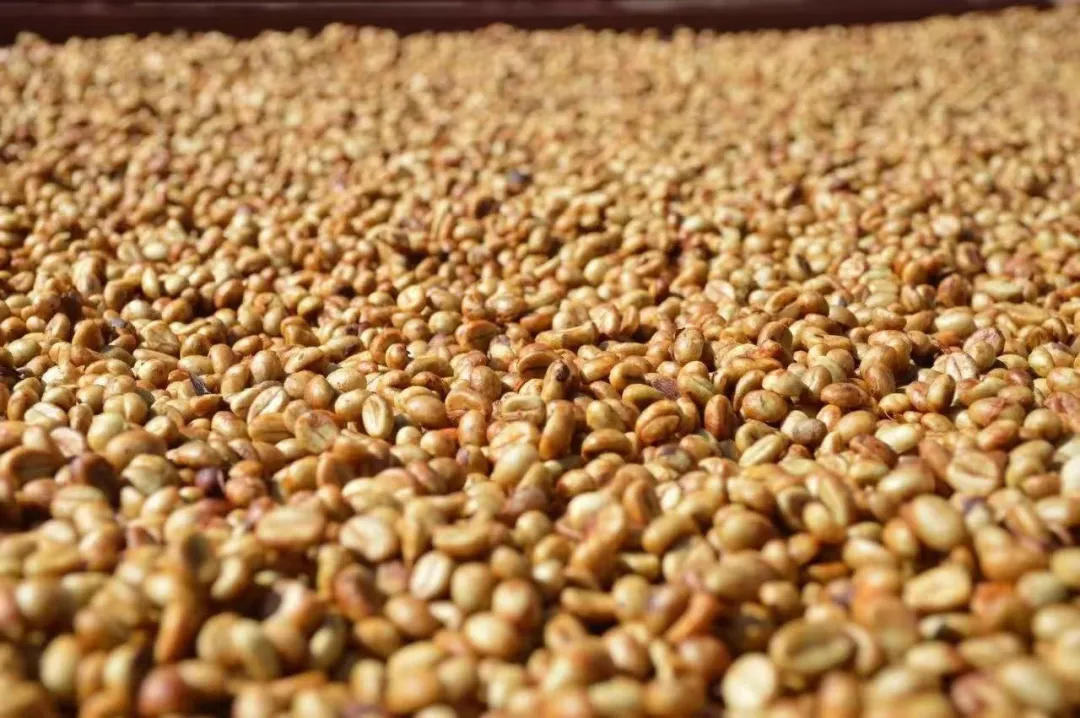
Because pectin contains a large amount of sugar, once it is exposed to the air it begins to oxidize, and its color gradually deepens as drying time increases. From the initial yellow-white, it gradually deepens to golden yellow, yellow, or even red and black! The specific degree of change depends on the amount of pectin retained, and their drying time also varies from 2 to 4 weeks depending on the pectin content.
The more completely the pectin is retained during the depulping stage, the longer the drying takes, and the darker the final pectin color. The familiar white, yellow, red, and black honey processes actually refer to honey processing with different degrees of pectin retention. White honey retains the least pectin, yellow and red come next, and black honey retains the most and most complete pectin.
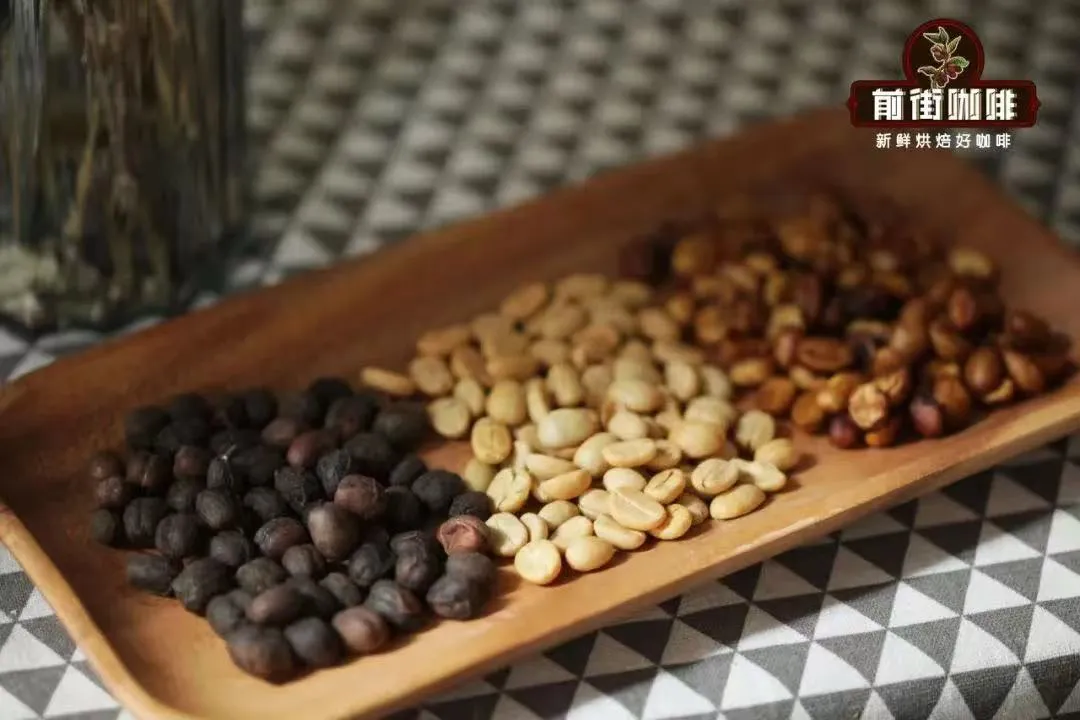
Theoretically, black honey processed coffee is the closest to naturally processed honey coffee, because it retains the most complete pectin, has the deepest fermentation, and the highest sweetness; however, correspondingly, because there are more steps, the price is also slightly higher. A representative coffee bean of black honey processing is Qianjie Blackberry, a high-altitude single-origin coffee from Costa Rica. Because it naturally has floral and fruity aromas, it is roasted medium-light, and in the cup it shows flavors of sweet florals, grape, sweet orange, and liqueur chocolate.

But interestingly, every producer defines the different colors of honey processing differently, because there is no clear standard in the industry to define them. So it is easy to encounter awkward situations such as: what this producer defines as "yellow honey" is defined by another as "white honey," or "red honey."
In addition to the conventional white, yellow, red, and black honey processes, there are also some rather special honey processes. For example, Qianjie Strawberry Candy and Mozart on the Qianjie bean list use the rather alternative "raisin honey process." The main difference between raisin honey process and conventional honey process is that before depulping, the coffee cherries are first dried in the sun for at least three days! Only after the coffee cherries begin to shrivel are they depulped and hulled, and then the honey processing steps begin.

This processing method allows the coffee to develop richer flavor expression! We recommend trying Qianjie Mozart and Qianjie Strawberry Candy; they both have complex flavors of strawberry, berries, and raisin, with very high sweetness! In summary, everyone can see that no matter what kind of honey process it is, its "honey" does not refer to the taste of the coffee, but to pectin that resembles honey in form~

Light Roast Pour-Over Floral Coffee Beans Recommendation: Qianjie Yirgacheffe Gedeo Dingding, Qianjie Panama Hacienda La Esmeralda Green Label Geisha Coffee Beans, QianjiePanama Butterfly Coffee Beans
Daily medium-light roast Yirgacheffe pour-over floral coffee bean recommendation, Qianjie Yirgacheffe Guddina, light roast brings the signature white floral notesAromatic, with lemon-citrus fruit notes and a refreshing floral tea note; bright and crisp on the palate. Great value and an ideal entry-level pour-over coffee with floral and fruity notesAn unrivalled choice.
Moka pot, home espresso, and espresso-based milk drinks like latte — recommended beans: Qianjie Classic Espresso Blend, using BrazilianWest, with Mandheling Arabica and a small amount of Vietnamese Robusta fully blended, delivering a rich and outstanding espressocrema; overall style is rich and memorable. Qianjie Brazil Queen's Estate coffee beans and Qianjie Classic Espresso Blend coffee beans are both mochaA highly recommended option for pot-style espresso machines.
Fruity-floral signature espresso latte bean recommendation: Qianjie Strawberry Candy espresso blend, featuring strawberry gummy and rose aromas,Full-bodied sweetness with a grape and almond finish; especially stunning as an iced latte. Made from Costa Rican honey-process beans, PanamaBlended from Panama Geisha coffee beans and select beans from Colombia's Huila region. Not only does it overturn traditional espresso flavor, the cremaalso performs well, with impressive showings in creative specialty drinks.
Now available on Taobao store「 Qianjie Coffee 」To purchase the above coffee beans, Qianjie Coffee offers dozens of selected single-origin pour-over and espresso coffee beans from around the world. Qianjie CoffeeQianjie Coffee is a veteran specialty coffee roaster; beans are freshly roasted within 5 days, with consistent quality and highly competitive pricesGreat value, ships within 24 hours. Qianjie Coffee is recommended by many coffee lovers and platforms.
Taobao Qianjie Coffee Link: https://qianjiecoffee.taobao.com
Or search our shop directly on Taobao 「Qianjie Coffee」
Qianjie Coffee Store Address: 315 Donghuadong Road, Yuexiu District, Guangzhou

Site Recommendations: 耶加雪菲 花魁咖啡 瑰夏咖啡 波旁咖啡 蓝山咖啡 天堂鸟咖啡豆 曼特宁咖啡豆 PWN黄金曼特宁 星巴克菜单 咖啡豆种类
Please indicate the source when reprinting.
2026-08-02 16:21:41
